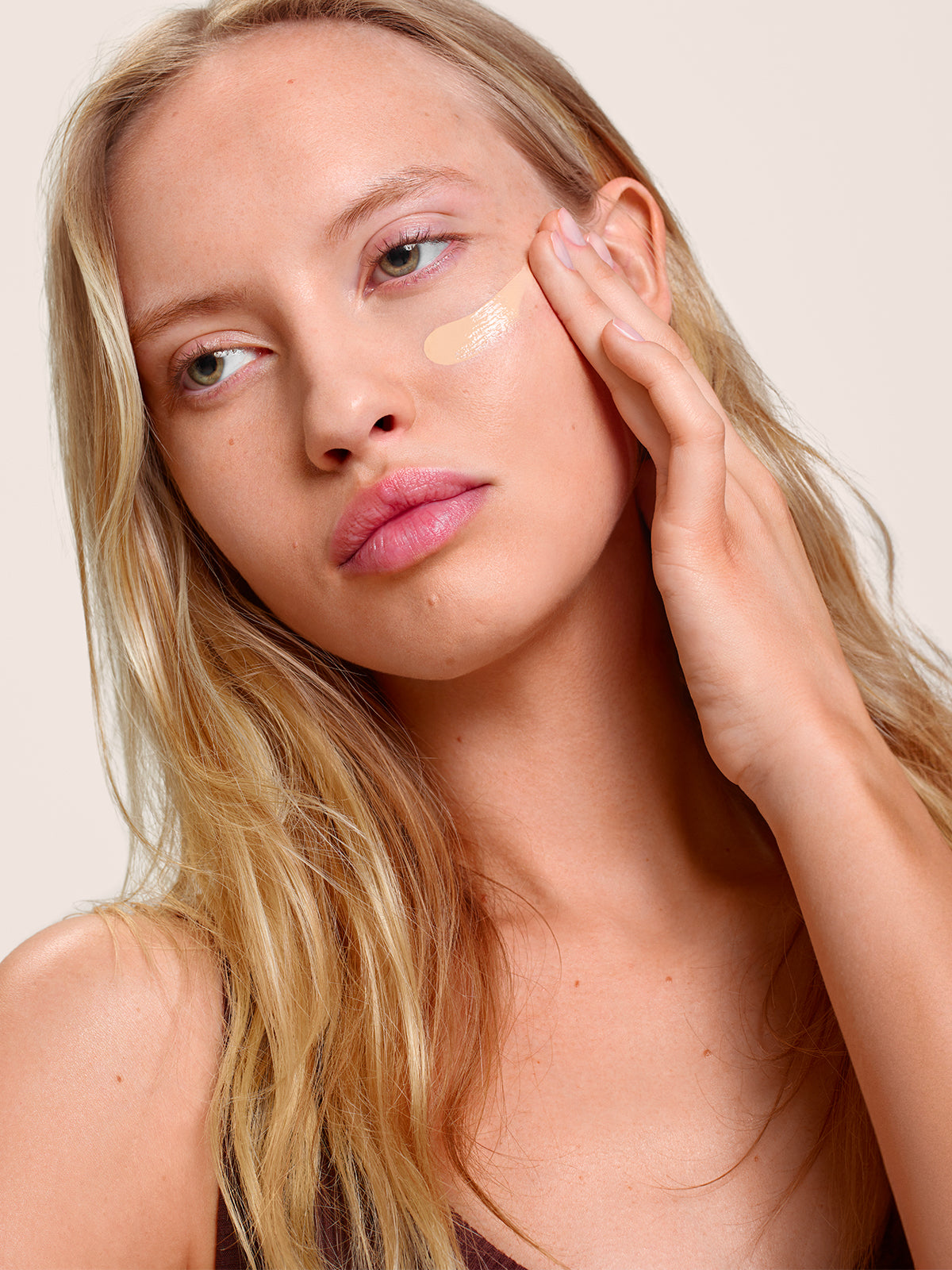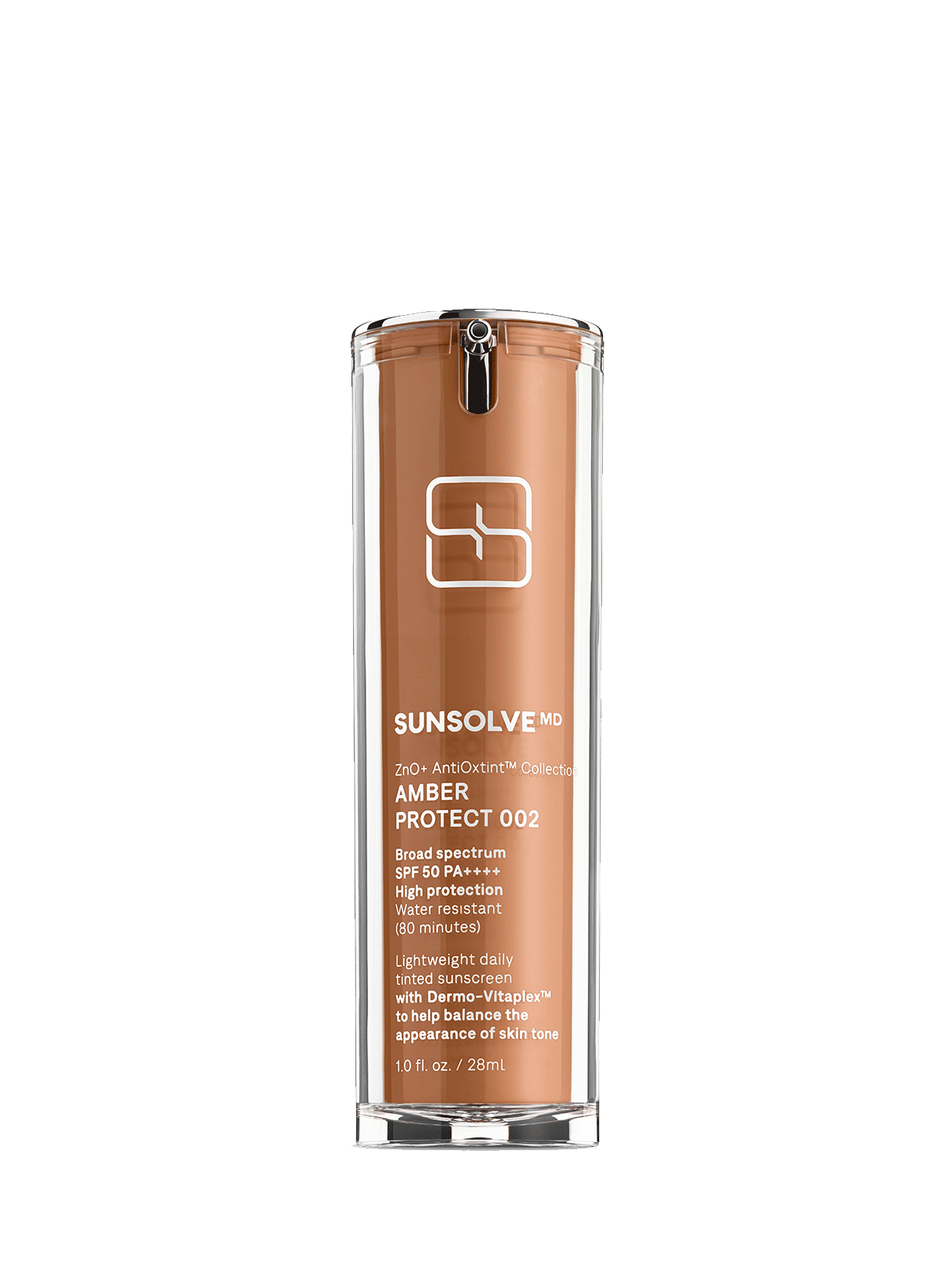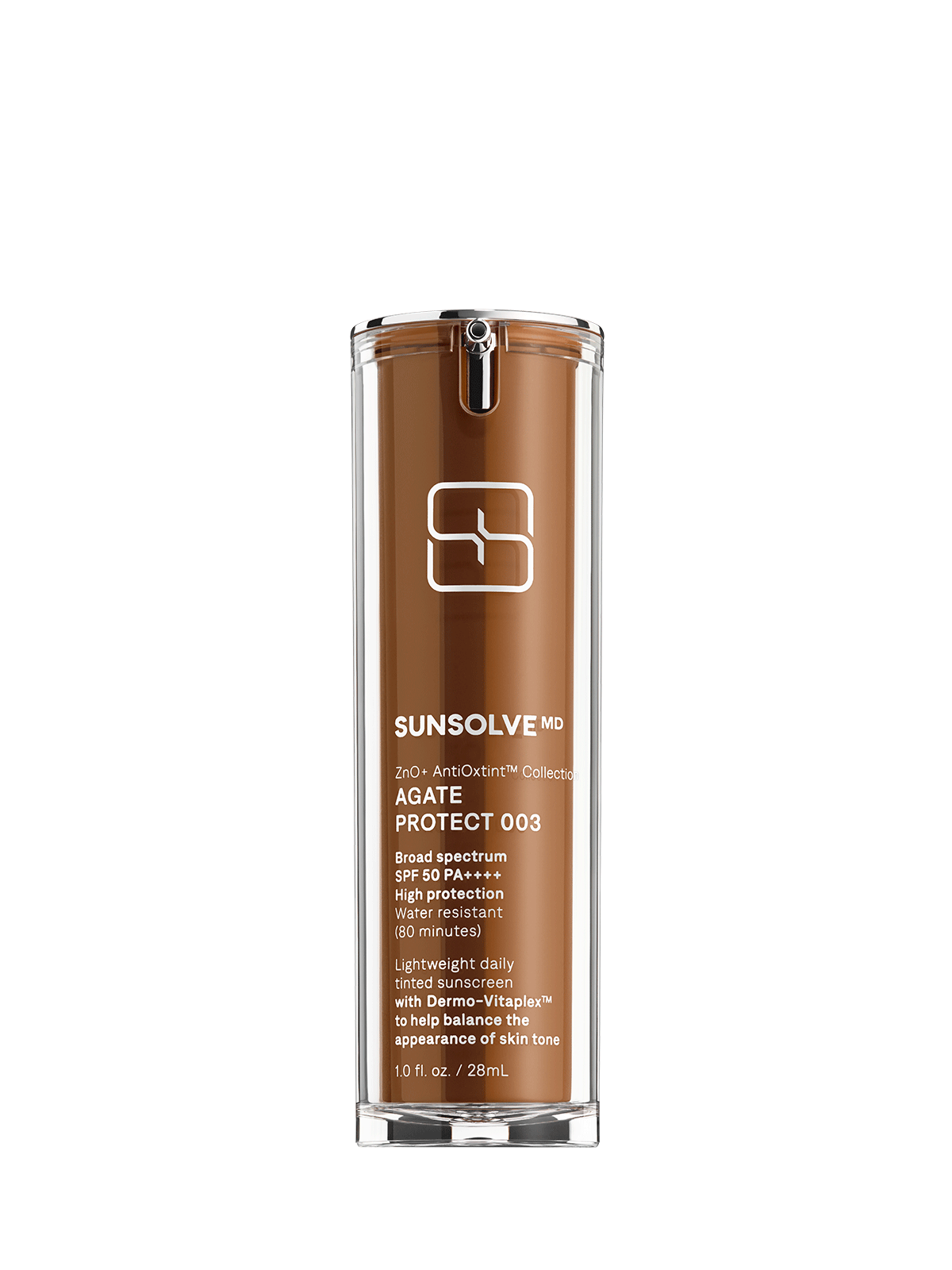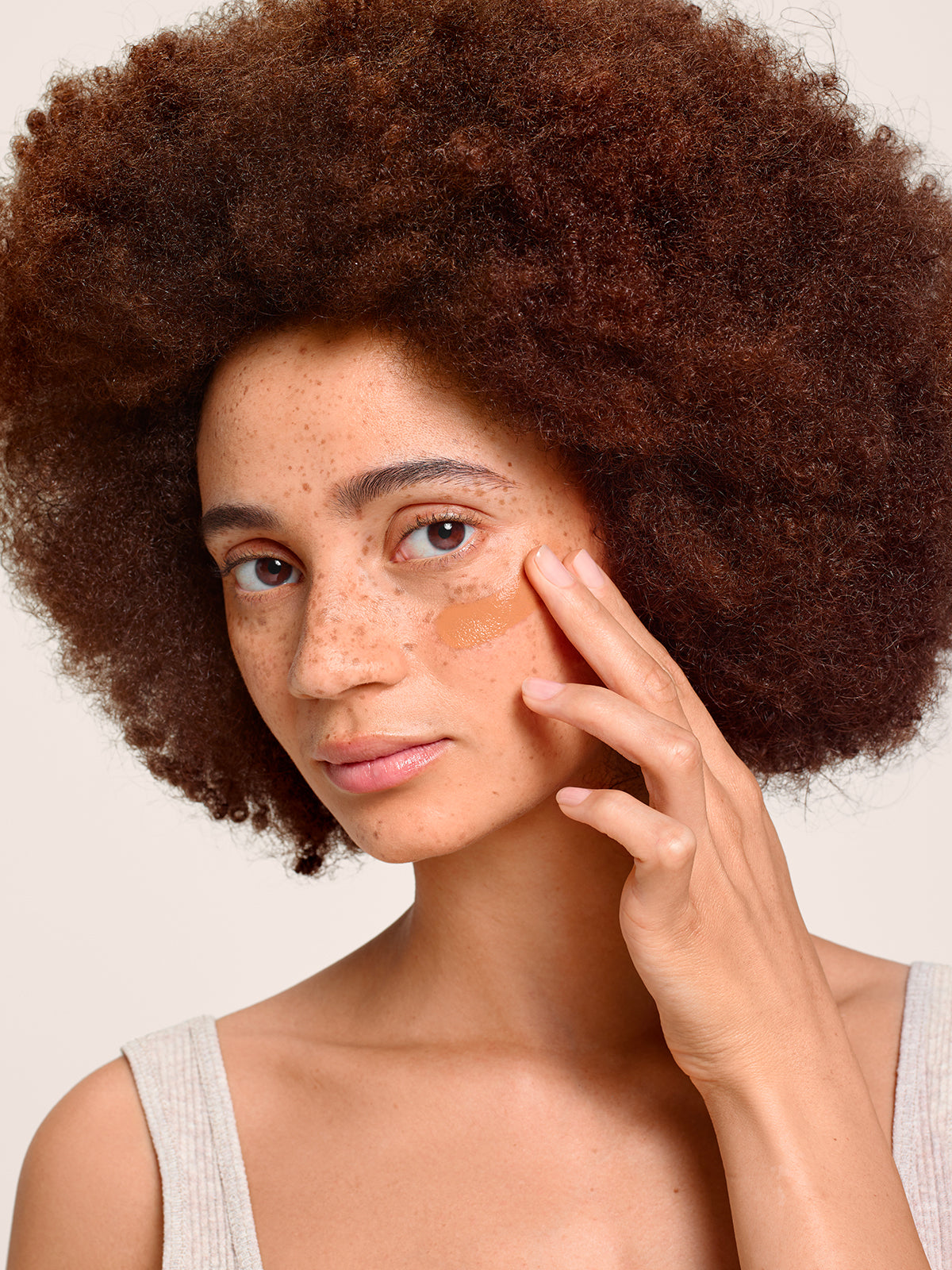






How to Choose the Right Shade of Tinted Sunscreen
Tinted sunscreen sits in an awkward middle ground between SPF and foundation, which means choosing the right shade is both more important and more confusing than it should be. Get it right and the formula disappears into the skin, providing protection and a subtle evening of tone in a single step. Get it wrong and you end up with the worst of both worlds: a mask-like cast that reads as makeup without the coverage to justify it, or an ashy mismatch that draws attention to itself in every photograph.
The shade matching conversation in tinted SPF has historically been dominated by brands with limited ranges, which has trained a generation of consumers to settle for "close enough." It is worth raising the standard. Tinted sunscreen should match your skin properly, and the process of finding the right shade is more methodical than the average beauty counter approach suggests.
Why Shade Matching Tinted SPF Is Different From Foundation
Foundation is designed to cover skin. Tinted SPF is designed to even it, and the formulation principles reflect that difference. The pigments in tinted SPF are typically iron oxides, which serve a dual purpose: they provide colour and they offer some protection against visible light, which is increasingly recognised as a contributor to pigmentation. The concentration of pigment is lower than in foundation, and the finish is meant to read as your own skin slightly more uniform, not as a layer over the top of it.
This changes the shade-matching exercise in two ways. First, the shade needs to be very close to your actual skin tone rather than half a shade off in either direction. Foundations have enough pigment to override minor mismatches; tinted SPF doesn't. Second, the undertone matters more than the depth, because the sheer coverage means the depth difference will be invisible if the undertone is wrong.
Identifying Your Undertone
The undertone is the underlying colour pulling through your skin, separate from how light or dark the skin itself is. The three categories are cool (pink, red, blue undertones), warm (yellow, golden, peach undertones), and neutral (a balance of both). Getting this right is the single most important variable in shade matching.
There are several reliable ways to identify it. Look at the veins on the inside of your wrist; blue or purple-toned veins indicate cool, green-toned veins indicate warm, and a mix of both indicates neutral. Consider how your skin reacts to sun exposure; skin that burns easily and rarely tans tends to be cool, skin that tans without burning tends to be warm, and skin that does both tends to be neutral. Notice which jewellery metals flatter you most; silver tends to suit cool undertones, gold tends to suit warm, and either works on neutral.
The undertone of the tinted SPF should match the undertone of your skin, even if the depth is slightly off. A cool-toned formula on warm-undertoned skin will read ashy and grey. A warm-toned formula on cool-undertoned skin will read orange and oxidised. The depth can be slightly off and still work; the undertone cannot.
How Iron Oxides Work In The Formula

The iron oxides that create the tint in mineral SPF do more than provide colour. They contribute to visible light protection, which is one of the key dermatological arguments for tinted formulations, and they interact with the underlying formula to create a finish that flatters rather than sits on top of the skin. The colour is doing structural work in the product, not just cosmetic.
Older mineral sunscreen formulations, particularly those built around larger-particle zinc oxide, developed a reputation for chalky finishes and difficulty blending, which made the shade-matching conversation feel higher-stakes than it needed to be. Modern non-nano zinc oxide combined with well-calibrated iron oxides has largely resolved this, producing tinted mineral formulations that disappear into skin across the full range of Fitzpatrick types. The shade-matching exercise today is genuinely about matching your skin's undertone and depth, not about compensating for a formula that fights the tone underneath.
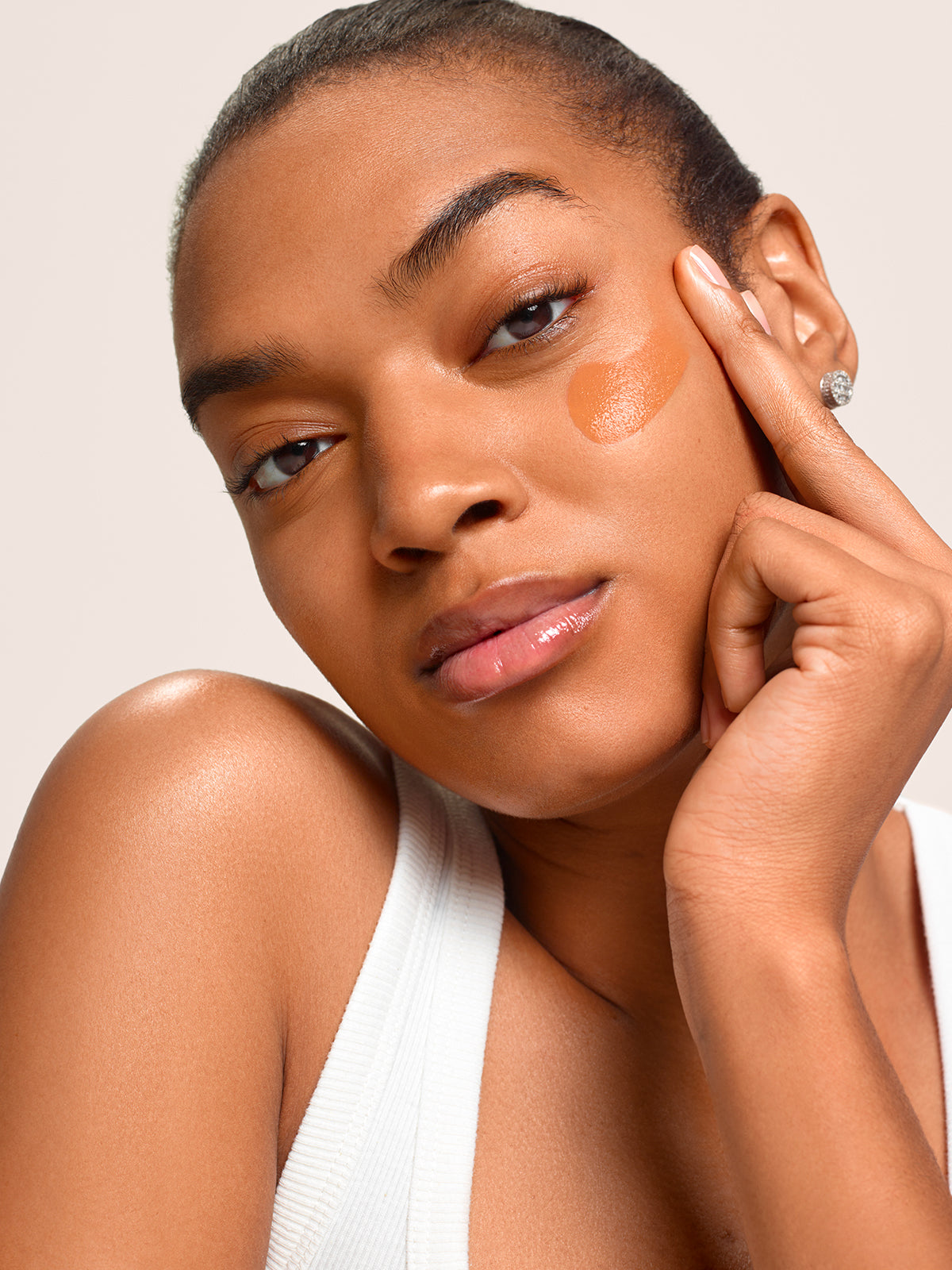
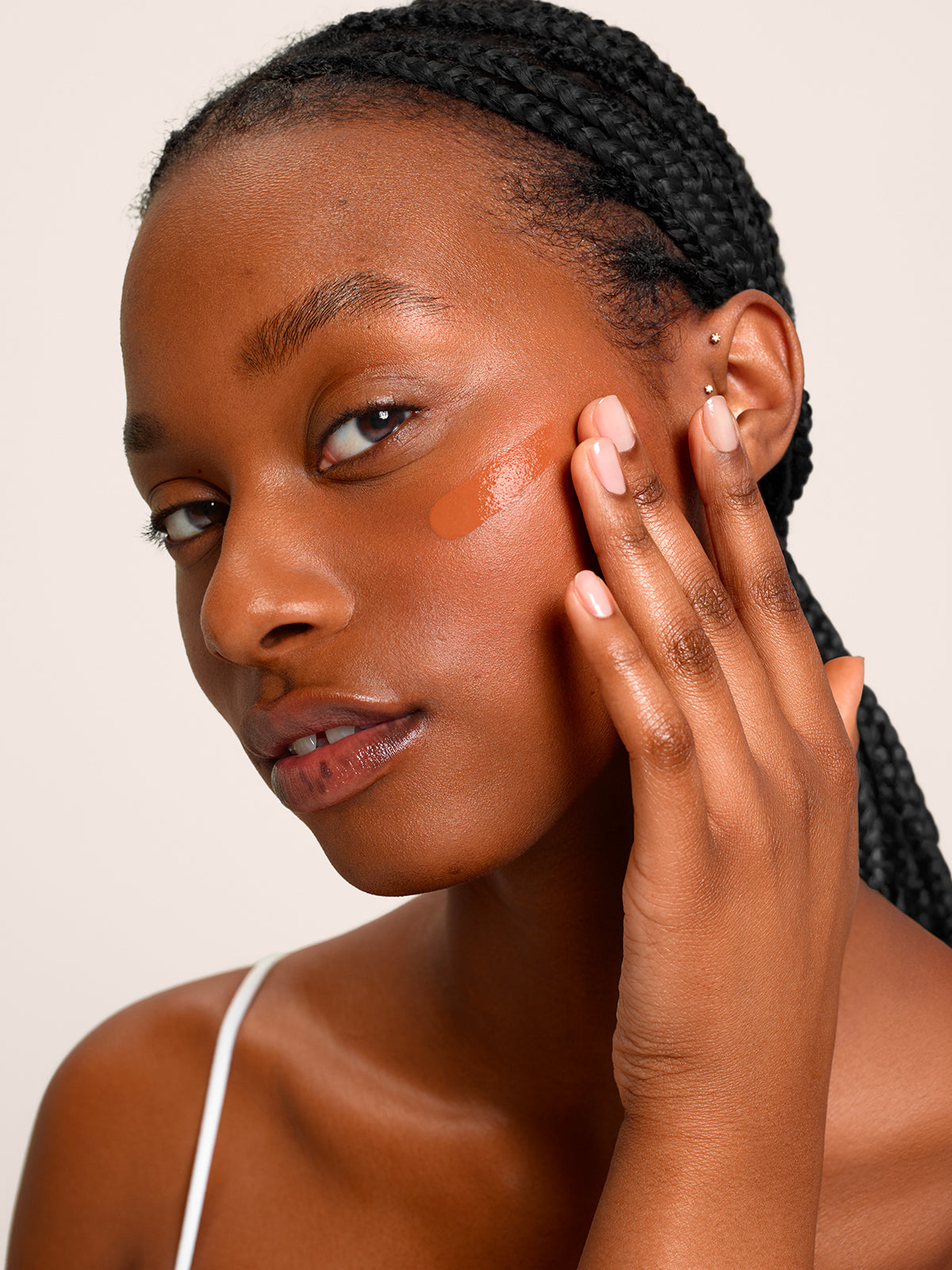
For deeper complexions in particular, the shade selection process is more about undertone accuracy than about correcting for reflectivity. Apply a small amount to the jawline, let it set for a few minutes, and check the area in natural daylight, indoor lighting, and ideally with a photograph using flash.
The Practical Testing Process
Online shopping for tinted SPF is risky without a trial. If you can test in person, the process should be: apply along the jawline rather than the back of the hand (different undertone), let it absorb for at least five minutes (formulas often oxidise or shift slightly), check in natural daylight rather than store lighting, and ideally view in a mirror that allows you to see your face and neck together. The right shade should be invisible at the boundary between face and neck. A visible line means the shade is wrong.
If you are testing at home from samples, do the same exercise but compare across a week of wear rather than a single day. Skin tone shifts subtly with hydration, season, and tan level, and the goal is a shade that works across that variation rather than one that matches your skin on a single morning.
When To Size Up Or Down
If you are between two shades, the conventional wisdom favours the lighter option, because tinted SPF tends to read warmer over the course of the day as it interacts with sebum and oxidises slightly. Going slightly darker tends to read as oxidation; going slightly lighter tends to read as natural skin in good light.
The exception is if your skin tans significantly through summer. Buying two shades (a lighter one for winter, a darker one for summer) is the more flexible approach for skin that shifts considerably across the year, and many brands now offer the same formula in adjacent shades that can be mixed for in-between matching.
What Makes SunsolveMD Different
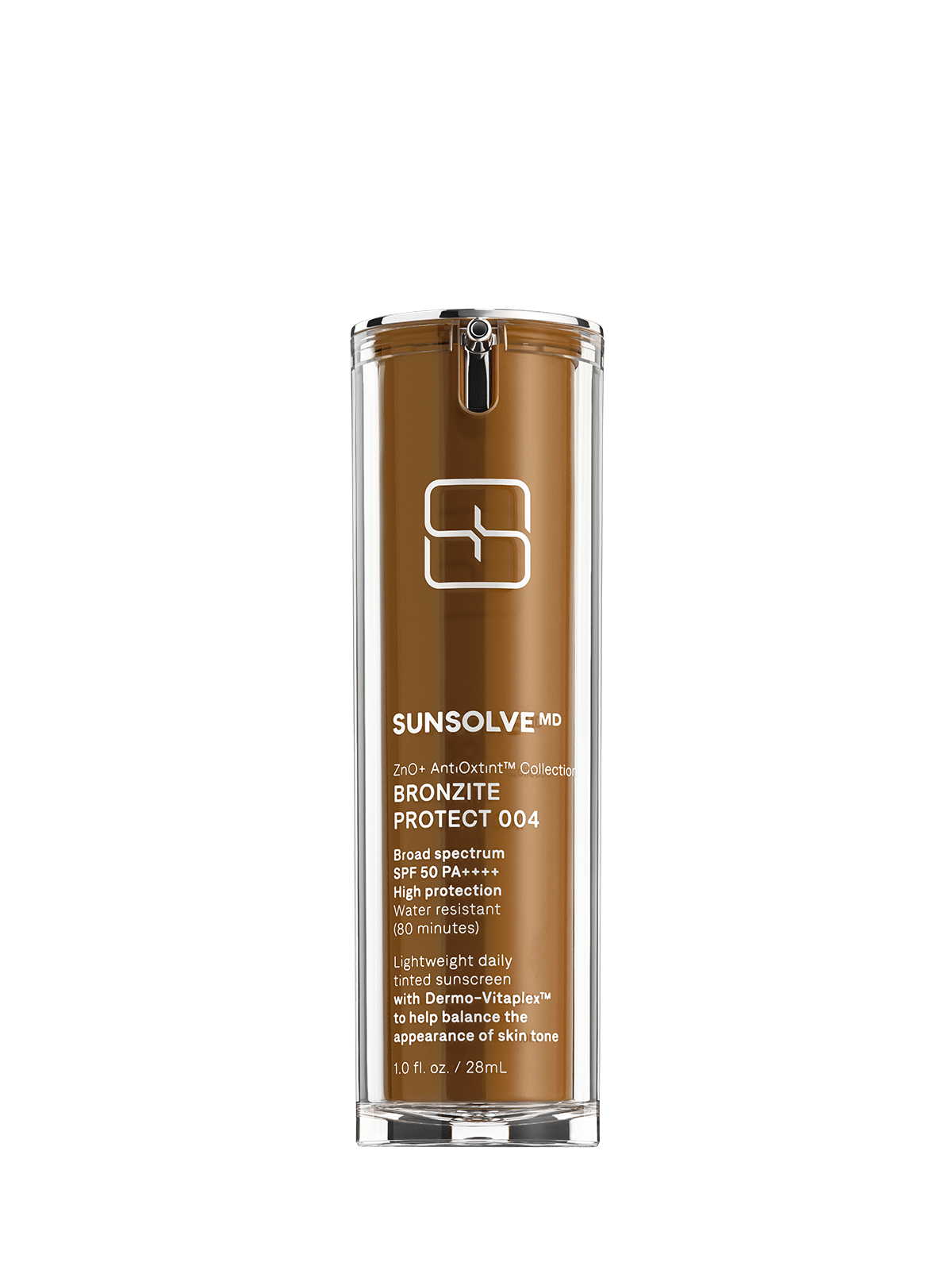
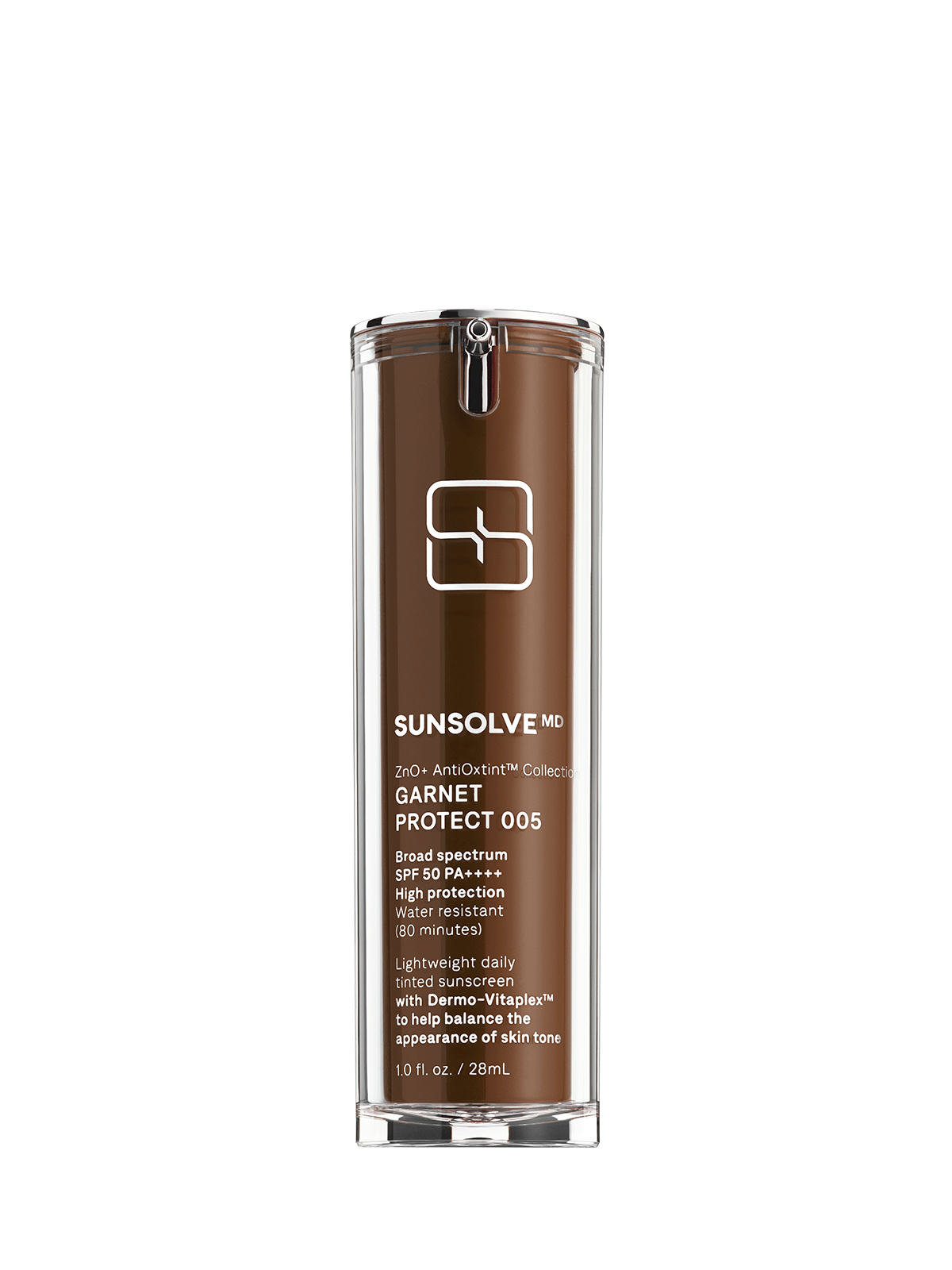
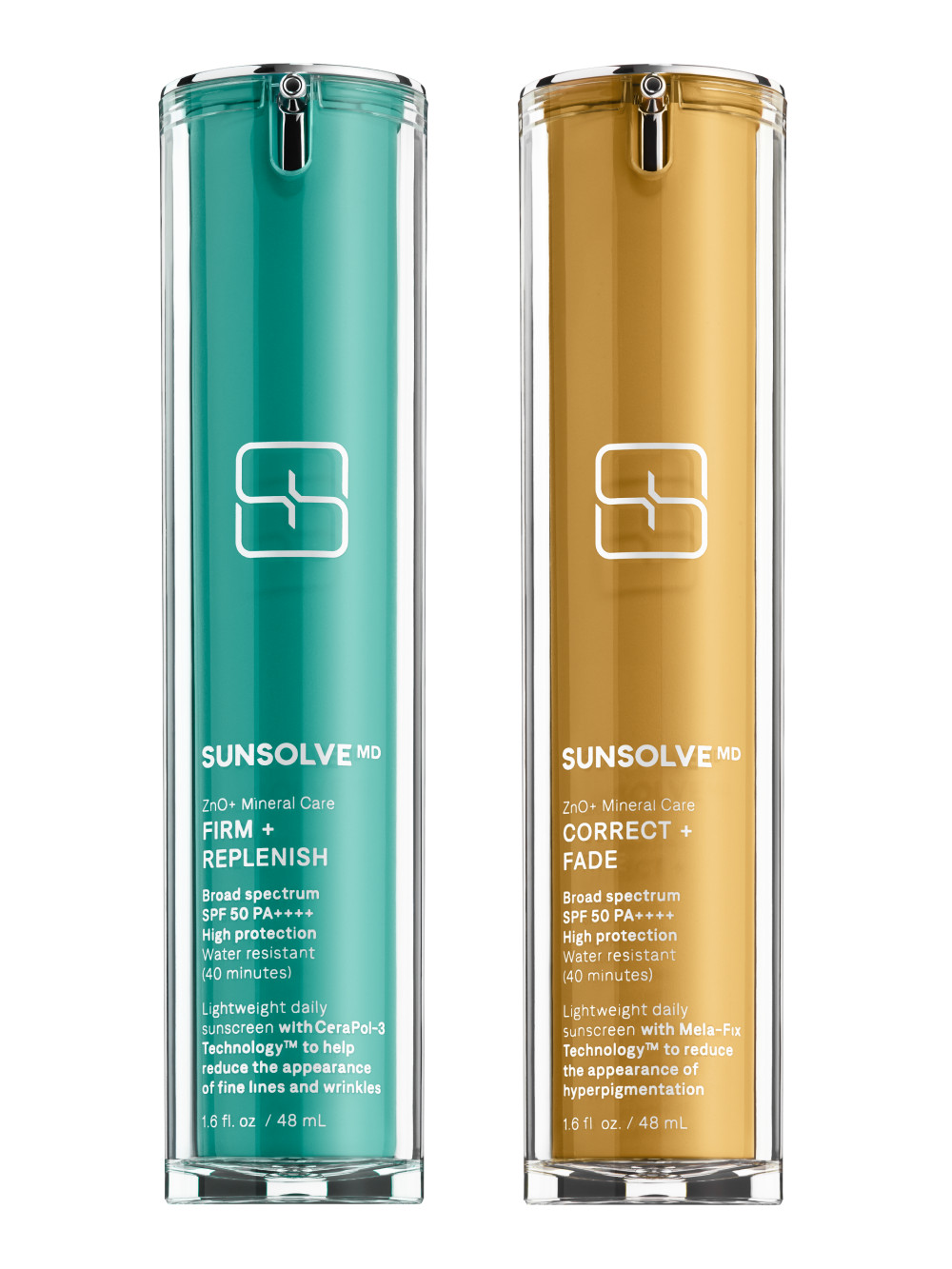
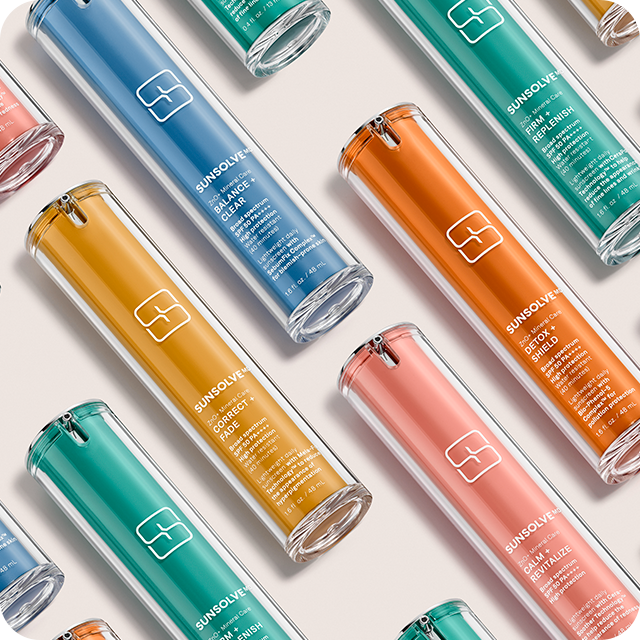
Our skin-perfecting SPF for a more even complexion was formulated with shade matching as a primary consideration rather than an afterthought. The ZnO+™ AntiOxtint platform combines 12% non-nano zinc oxide with iron oxides calibrated to flatter rather than mask, providing genuine broad-spectrum mineral protection that disappears into the skin rather than sitting on top of it. The texture blends seamlessly across multiple tones and undertones, with the kind of finish that reads as your own skin slightly more even. Tinted SPF should be the easiest way to look protected and polished. With the right shade, it is.
FAQs
Should I match tinted SPF to my face or my neck?
The face, but ideally checking that there is no visible line at the jawline where your face meets your neck.
Does tinted sunscreen leave a white cast?
Nope! You can avoid a white cast with tinted sunscreen, so long as the shade matches your skin tone (otherwise you can end up looking like you’ve applied foundation without a good shade match.)
Will tinted SPF oxidise like foundation?
Some formulas do shift slightly through the day, particularly on oilier skin. Going a touch lighter than your perfect match accounts for this.
Can I mix two shades together?
Yes, particularly useful for in-between matches or for seasonal shifts in skin tone.
Does tinted SPF replace foundation entirely?
For most daily wear, yes. For events or photography requiring fuller coverage, layer foundation over tinted SPF rather than relying on it alone.
How often should I reassess my shade?
Twice a year is a reasonable rhythm, accounting for seasonal shifts in tan level and skin tone.