



Best Sunscreens for Oily Skin: Reviewed by Experts
If you have oily skin, finding a suitable sunscreen feels like an impossible task. Most formulas are too rich, too occlusive, or formulated with silicones and emollients that trap sebum and trigger breakouts. You're told to wear SPF daily - which you should - but every option seems designed for dry or "normal" skin, leaving you to choose between protection and a tolerable texture.
The good news is that sunscreen for oily skin isn't a lost cause. It's a formulation challenge, and when done correctly, SPF can actually support oil regulation rather than exacerbate it. The key is understanding what makes a formula suitable for sebum-prone skin, which ingredients to avoid, and why mineral-based options often outperform chemical alternatives for this specific concern.
Here's what dermatologists and formulators actually recommend - and why.
Why Oily Skin Struggles With Sunscreen
Oily skin produces excess sebum due to overactive sebaceous glands, which can be triggered by genetics, hormones, climate, or barrier dysfunction. When you layer a heavy, occlusive sunscreen on top of that natural oil production, you get a greasy, shiny finish that feels uncomfortable and looks unflattering.
But it's not just cosmetic. Many sunscreens contain ingredients that can actively worsen oiliness. Chemical filters like avobenzone and oxybenzone require oils or silicones to stay suspended in the formula, which means the base tends to be richer and more emollient. Physical blockers like zinc oxide and titanium dioxide can also feel heavy if they're formulated with thick, paste-like textures designed to mask white cast.
Additionally, occlusive ingredients - silicones, mineral oil, coconut oil, shea butter - create a barrier on the skin's surface that traps sebum underneath. This leads to congestion, clogged pores, and breakouts, especially if you're already acne-prone. The result is a category of products that feels fundamentally incompatible with how your skin behaves.
What to Look for in Sunscreen for Oily Skin
The ideal sunscreen for oily skin is lightweight, mattifying, non-comedogenic, and formulated without heavy oils or occlusive silicones. It should absorb quickly, leave a dry-touch or semi-matte finish, and layer well under makeup without pilling or sliding around.
Texture matters as much as ingredients. Gel-based or fluid formulas tend to work better than thick creams. Water-light textures, serum-style SPFs, and mousse formulations can all provide adequate coverage without the weight.
Mineral sunscreens - specifically those using micronized zinc oxide - are often superior for oily skin because zinc has natural sebum-regulating and anti-inflammatory properties. It sits on the skin's surface rather than requiring oil-heavy bases, and when formulated correctly, it provides a smooth, breathable finish that doesn't trap oil or cause congestion.
Chemical sunscreens can work too, but they need to be formulated with mattifying agents like silica, kaolin clay, or niacinamide to counteract the natural oiliness of the base. Without these, they tend to feel greasy within hours.
Ingredients to Avoid
If you have oily or acne-prone skin, these ingredients are common culprits for breakouts, congestion, and excess shine:
Coconut oil and coconut derivatives - Highly comedogenic and occlusive, these trap sebum and clog pores.
Isopropyl myristate and isopropyl palmitate - Emollients that can trigger breakouts in oily skin types.
Heavy silicones (dimethicone, cyclopentasiloxane) - While some silicones are fine, high concentrations can create a barrier that traps oil and leads to congestion.
Mineral oil and petrolatum - Occlusive ingredients that sit on the skin and prevent sebum from evaporating, leading to shine and potential breakouts.
Fragrance and essential oils - Can irritate skin and trigger increased oil production as a defensive response.
Ingredients That Actually Help
Certain actives can support oil regulation and skin clarity while providing sun protection:
Niacinamide - Regulates sebum production, reduces pore appearance, and calms inflammation. It's one of the most effective ingredients for oily, acne-prone skin.
Zinc oxide - Beyond UV protection, zinc is naturally antimicrobial and sebum-regulating. It helps control oil without drying out the skin.
Silica or kaolin clay - Mattifying agents that absorb excess oil throughout the day.
Salicylic acid - A BHA that exfoliates inside pores, preventing congestion and breakouts while allowing SPF to sit smoothly on the skin.
Lightweight hyaluronic acid - Provides hydration without adding oil, which is important because dehydrated skin can overproduce sebum to compensate.
Our Recommendations
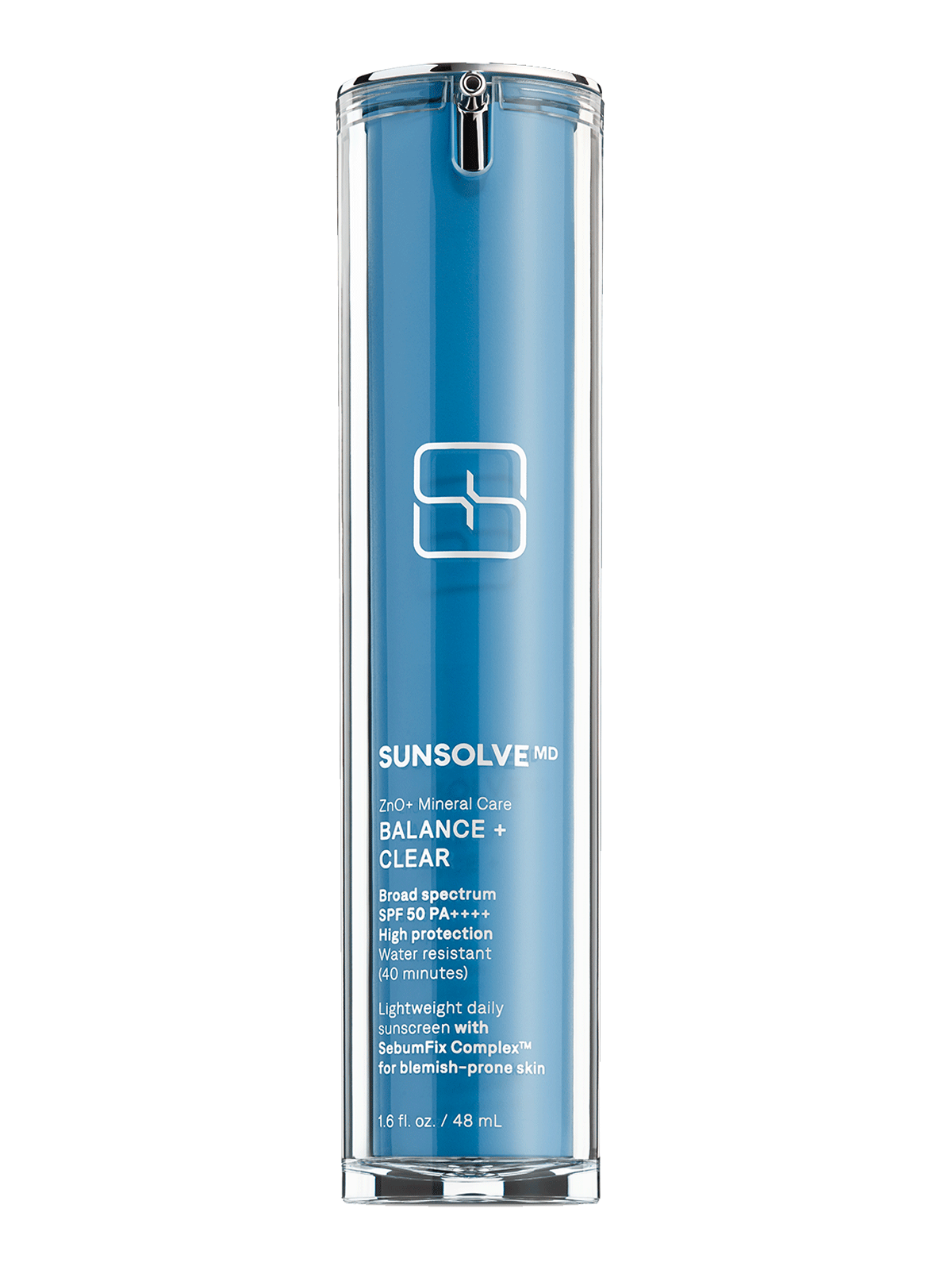
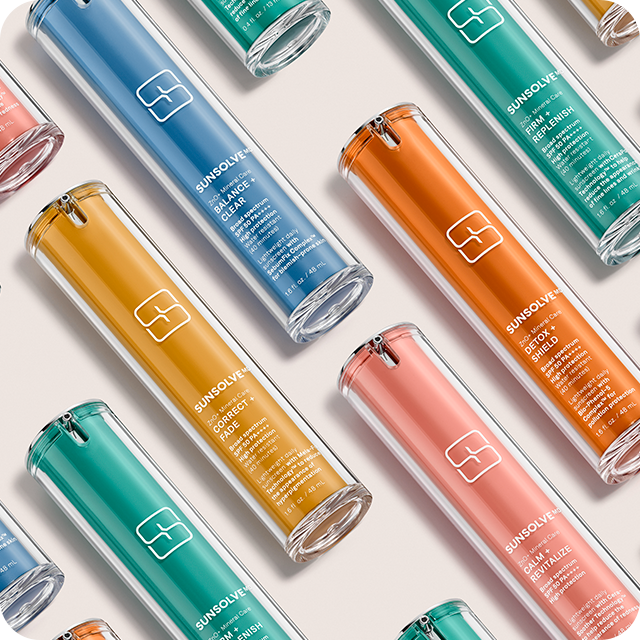
For Oily, Acne-Prone Skin: Balance + Clear
This is the formula we engineered specifically for sebum-prone, breakout-prone skin that needs UV protection without congestion. It combines 12% non-nano zinc oxide with our proprietary SebumFix complex - a triple-targeting system that addresses blemishes, inflammation, and excess oil production simultaneously.
The texture is lightweight and breathable, with a semi-matte finish that doesn't emphasize pores or create shine. Clinical testing showed that 90% of participants experienced fewer breakouts and visibly calmer skin within 28 days of use. It's non-comedogenic, fragrance-free, and formulated to work with acids and retinoids without causing irritation.
Beyond oil control, it delivers our SolveDNAReverse™ technology - a patent-protected complex that supports DNA repair and reverses UV-induced oxidative damage at a cellular level. You're getting acne management and anti-aging protection in a single, wearable formula.
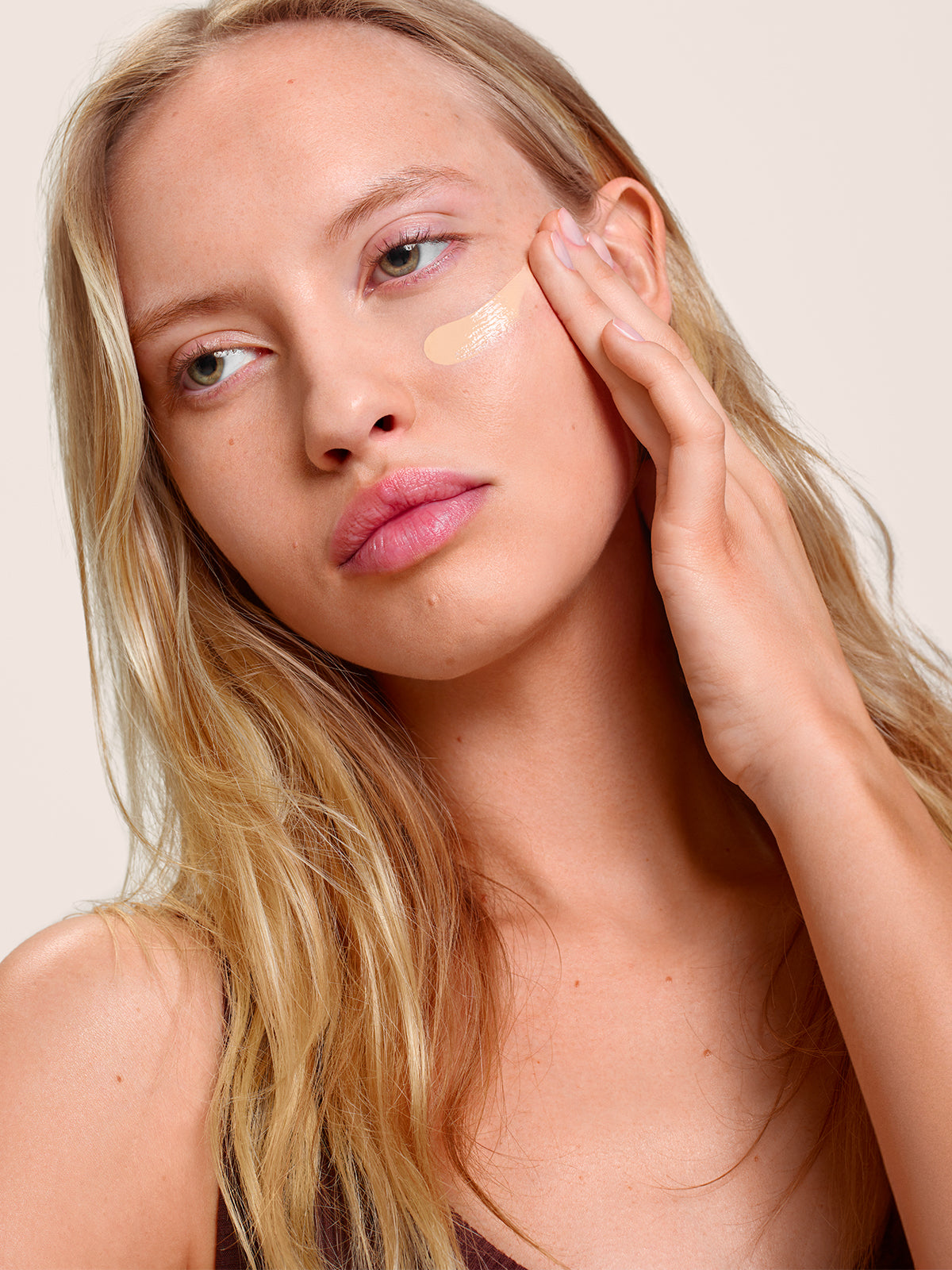
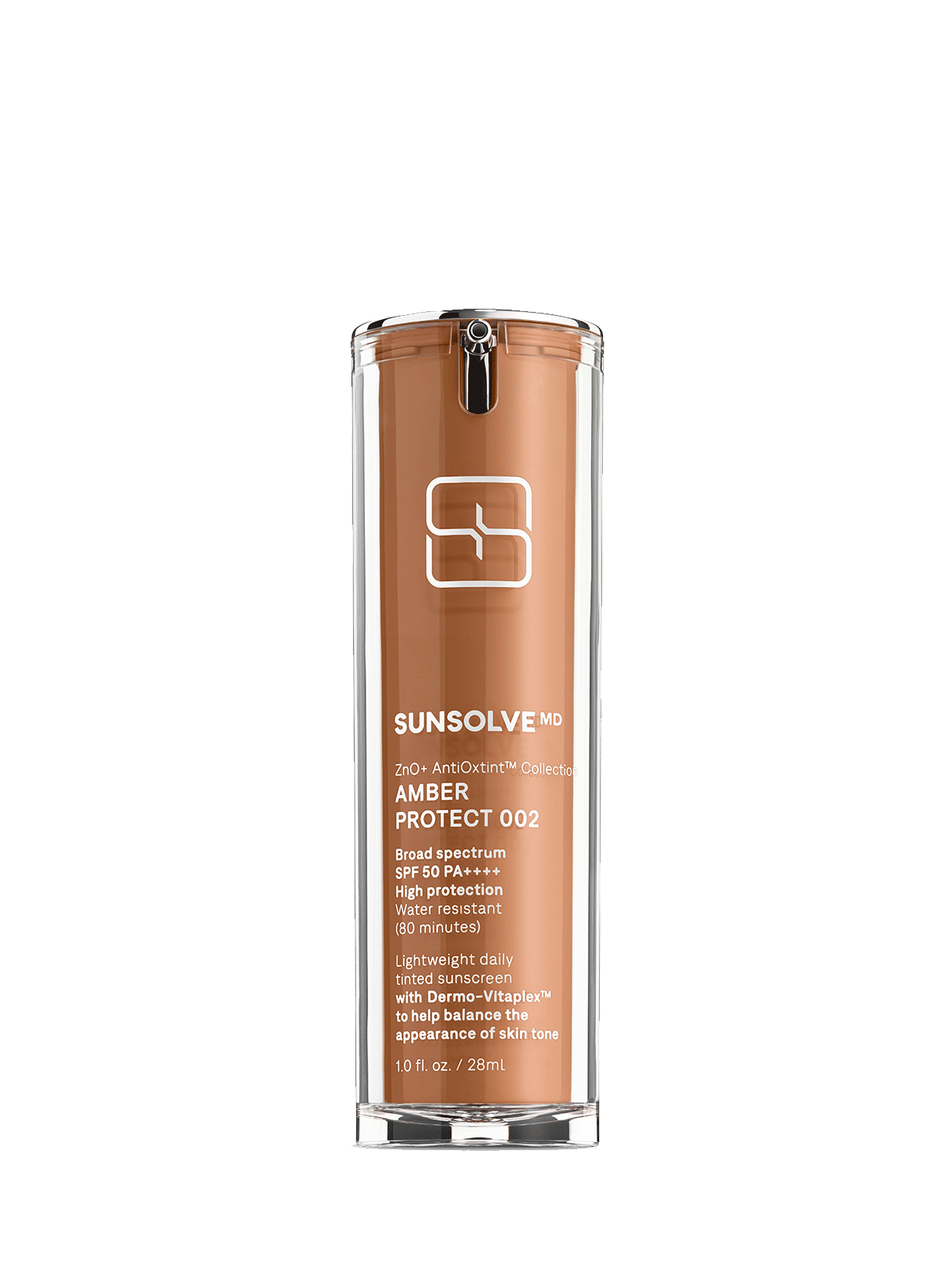
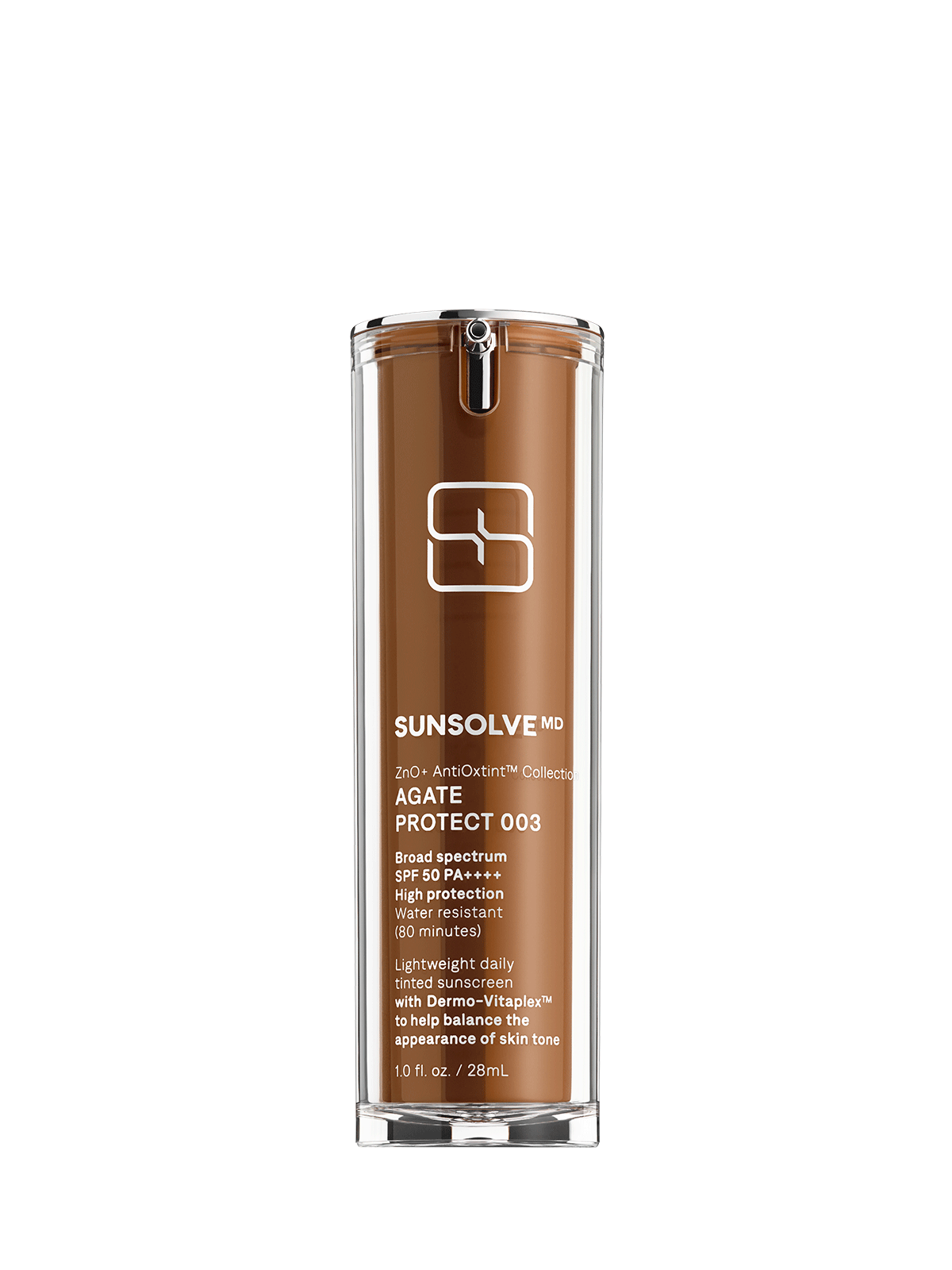
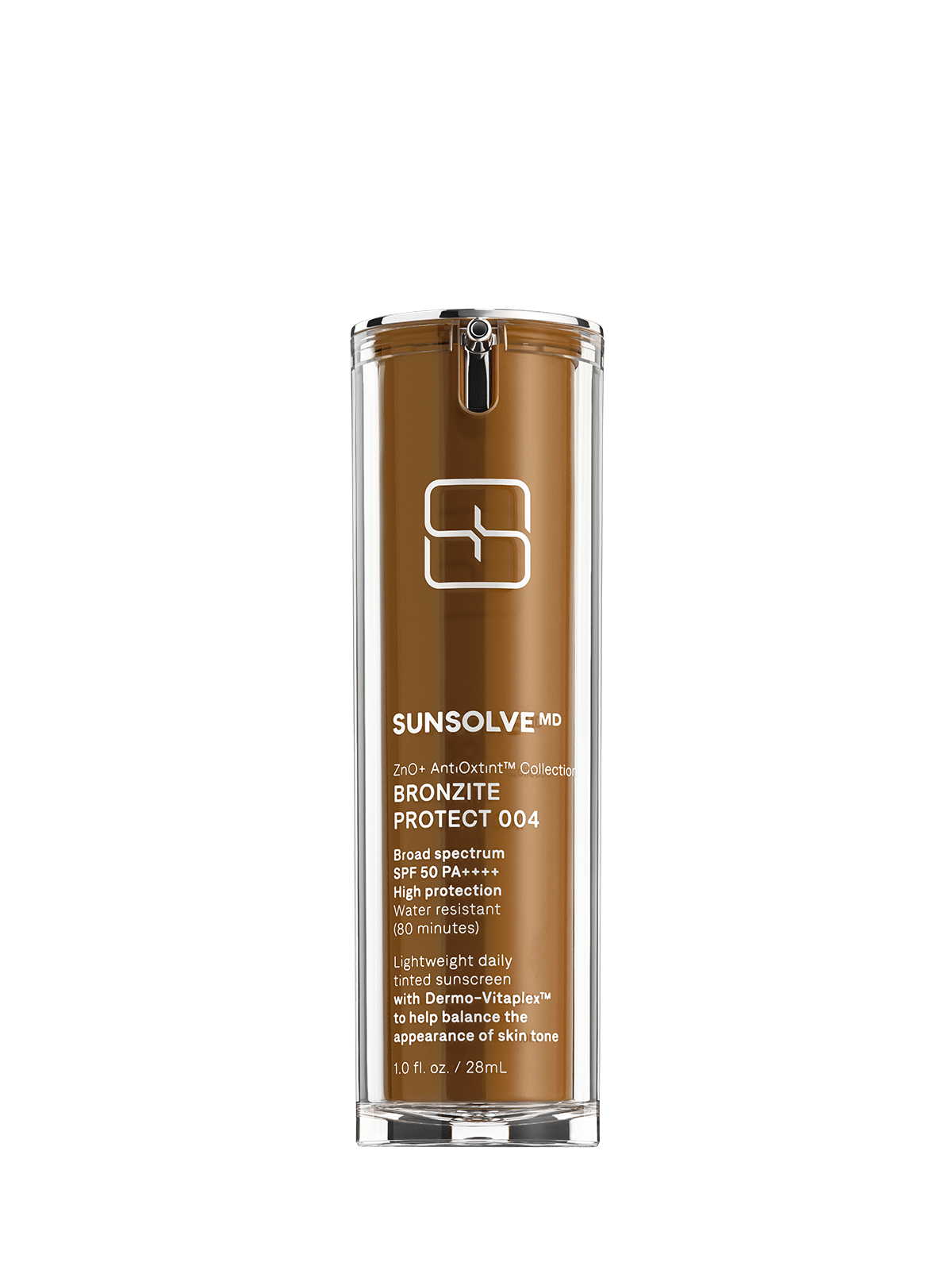
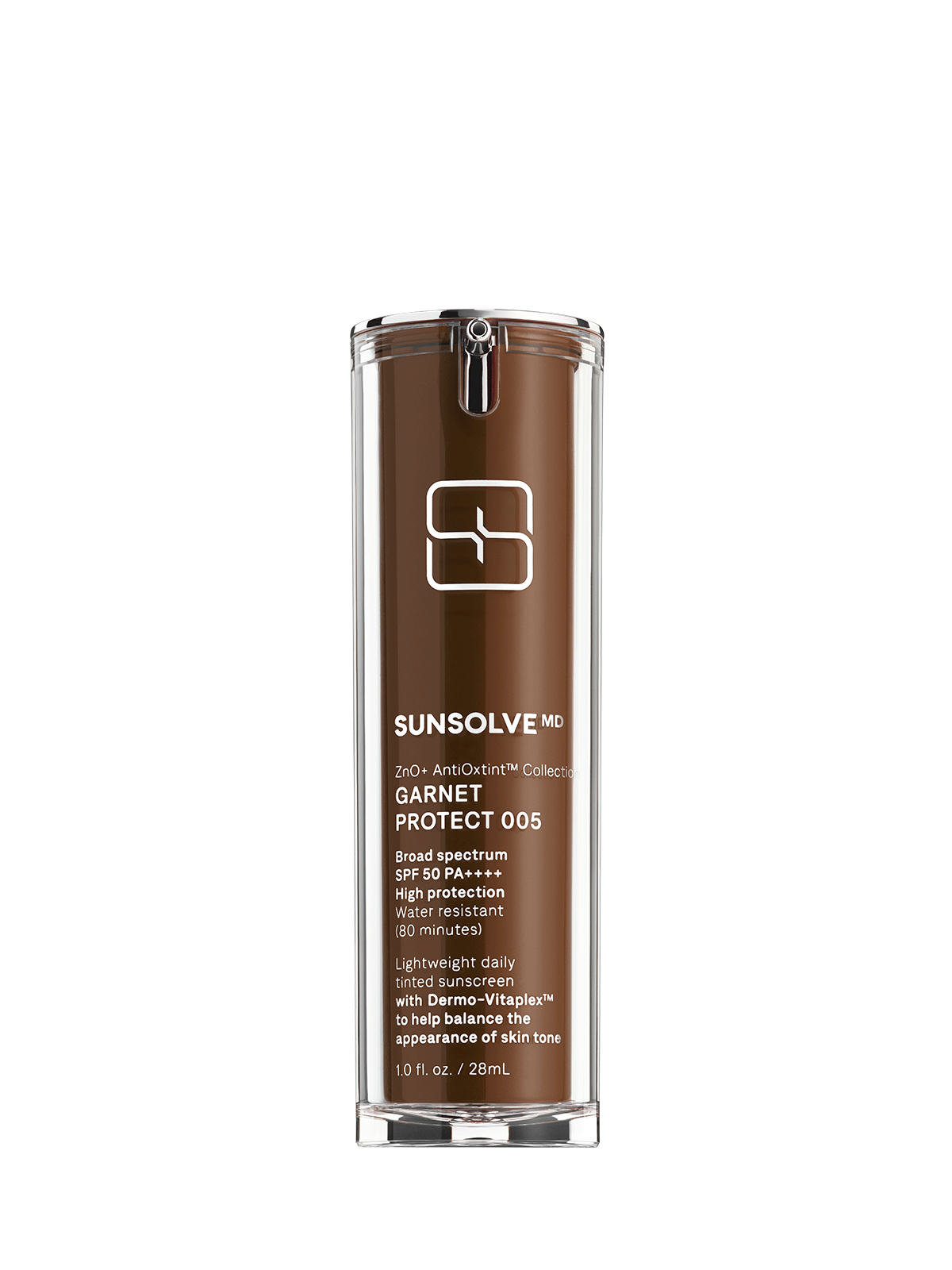
For Oily Skin That Wants a Tint: Bronzite or Quartz Protect
Our tinted mineral range provides sheer, blendable color with a natural semi-matte finish. The formulas are designed to even tone without feeling heavy or cakey, and they work across all Fitzpatrick skin types without oxidizing or turning orange throughout the day.
The tint helps neutralize any potential white cast from the zinc oxide while providing light coverage that reduces the need for foundation. The finish is skin-like rather than powdery, and it layers well if you do want to add makeup on top.
Both deliver 12% non-nano zinc oxide suspended in our ZnO+™ system - a dynamic base of marine enzymes, antioxidant buffers, and targeted actives that enhance blendability and create a breathable, second-skin texture. You're getting broad-spectrum UVA/UVB defense that doesn't interfere with oil production or trigger breakouts.
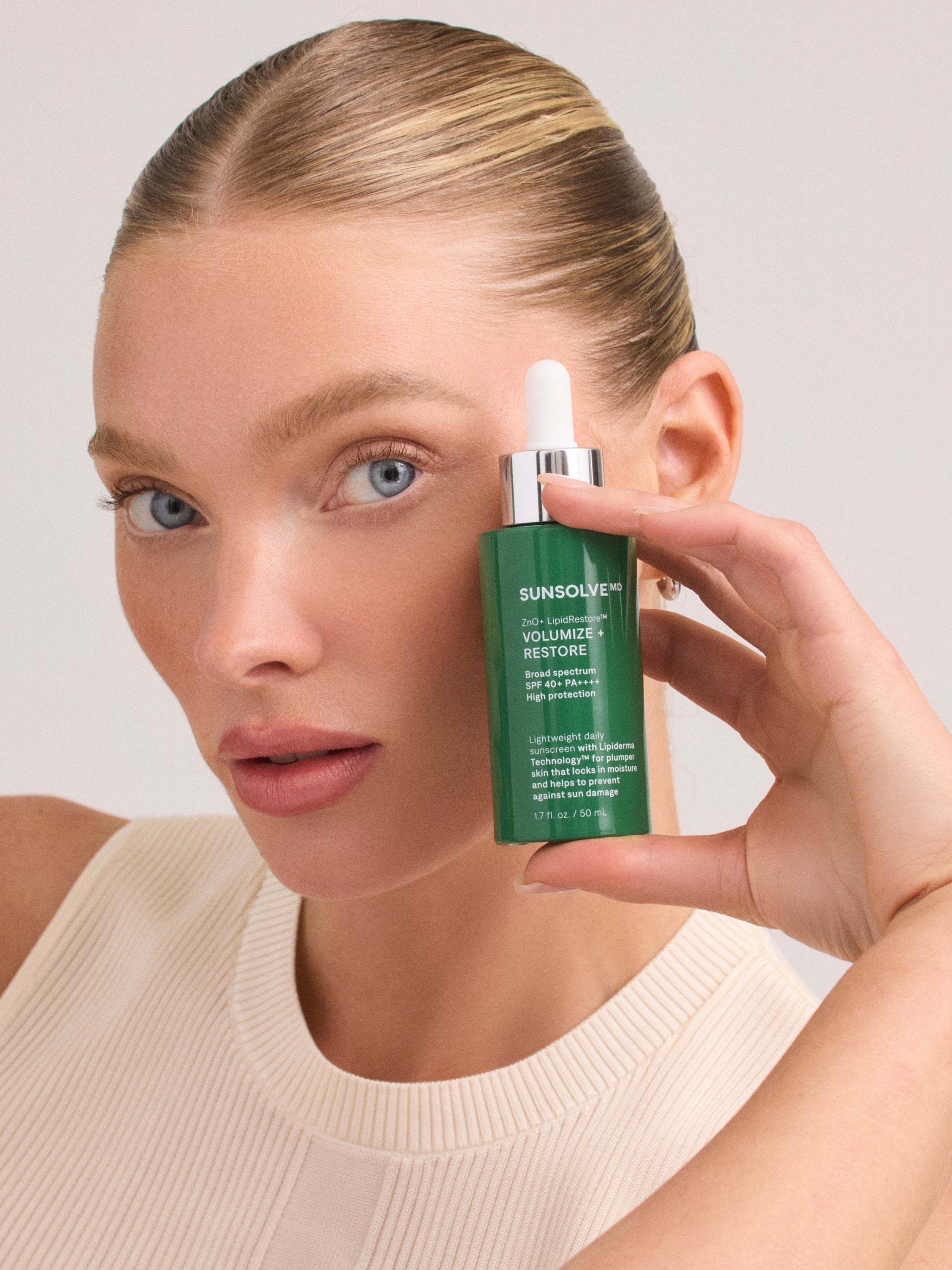
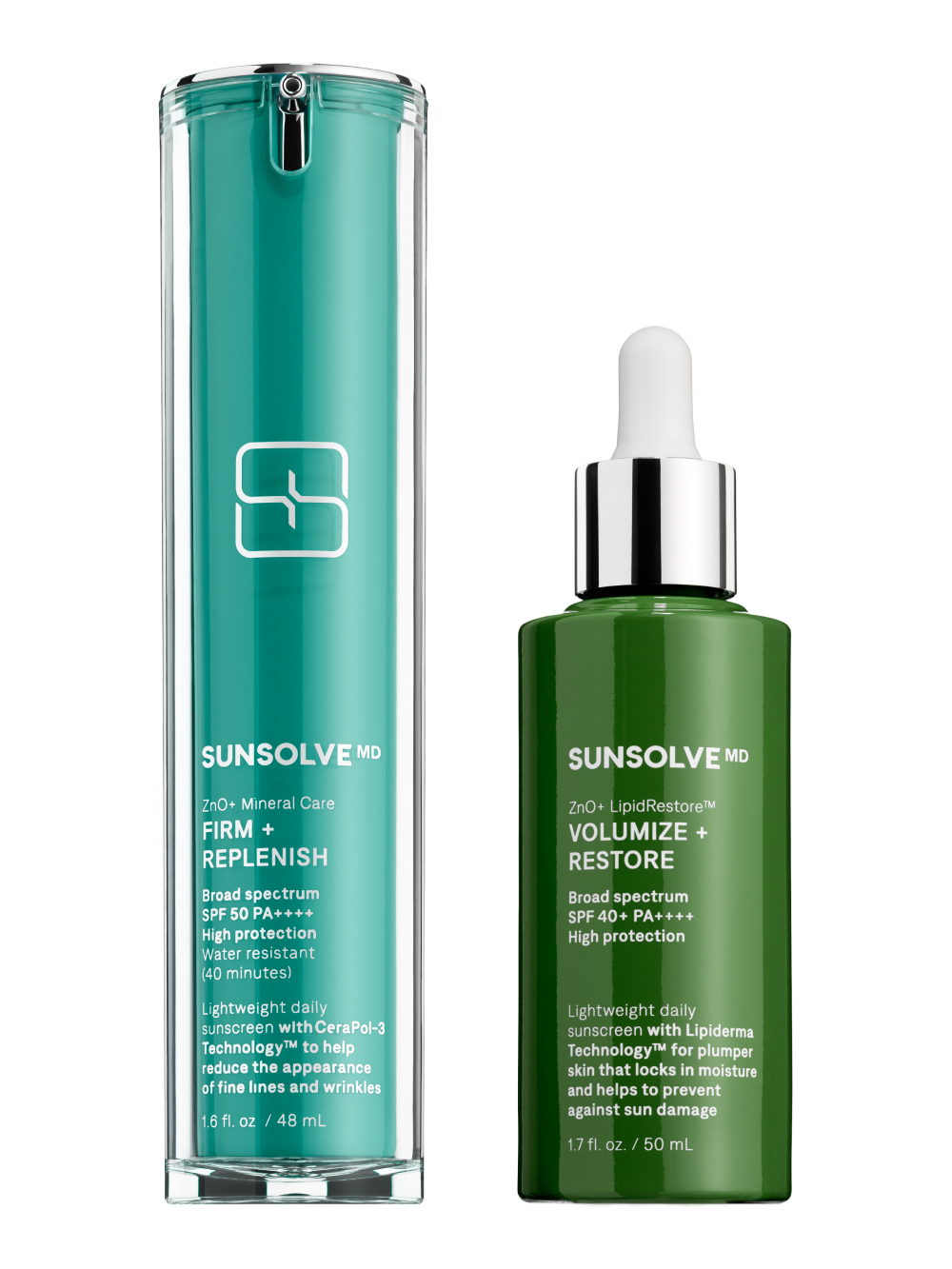
For Combination Skin: Volumize + Restore
If your skin is oily in the T-zone but dehydrated elsewhere, this formula balances hydration without adding grease. It floods the skin with lipid-rich actives that support barrier function while maintaining a lightweight, non-occlusive texture.
The key is that it addresses dehydration - which can trigger compensatory oil production - without using heavy oils or butters. You get plumping hydration with a finish that doesn't feel slick or shiny, even in areas where you produce more sebum.
Application Tips for Oily Skin

Even the best sunscreen for oily skin can feel greasy if it's not applied correctly. Here's how to optimize wear:
Start with a clean, balanced base. If your skin is producing excess oil because it's dehydrated or irritated, adding more products won't help. Make sure your routine is supporting barrier function and not stripping your skin.
Apply in thin layers. Don't glob on a thick coating of SPF. Use the recommended half teaspoon, but apply it in sections and blend thoroughly. Let it absorb for 30-60 seconds before layering anything else on top.
Skip the moisturizer if your SPF is hydrating enough. Many people with oily skin don't need a separate moisturizer under SPF - the sunscreen itself can provide adequate hydration. Experiment with using SPF alone to see if your skin feels balanced.
Blot, don't powder. If you get shiny throughout the day, use blotting papers rather than adding more powder, which can make things look cakey. Reapply SPF as needed with a clean application rather than layering over sebum.
Set with a mattifying spray if needed. A lightweight setting spray with oil-control properties can help extend the wear of your SPF without adding texture or weight.
Why We Focus on Mineral for Oily Skin
At SunsolveMD, we chose to build our range exclusively on zinc oxide because it's the most skin-compatible, non-comedogenic, and sebum-regulating UV filter available. It sits on the skin's surface, provides natural antibacterial protection, and doesn't require the oil-heavy bases that chemical filters need to stay stable.
Our ZnO+™ system takes this further by suspending 12% non-nano zinc oxide in a breathable matrix engineered for lightweight wear. You get full broad-spectrum UVA/UVB protection without the grease, congestion, or breakouts that typically come with daily SPF use on oily skin.
But we didn't stop at making mineral sunscreen wearable. Every formula is built on SolveTech™ - a patent-protected biotech platform that intercepts the biological processes behind UV-induced skin dysfunction. That includes DNA mutation, inflammation, pigment imbalance, and barrier breakdown.
At the core is SolveDNAReverse™, our proprietary complex that supports your skin's natural DNA repair enzymes and reverses oxidative damage caused by sun exposure. You're not just preventing UV damage - you're actively repairing it while you're protected.
Developed in-house at our Los Angeles biotech lab and engineered at our clinical innovation hub in Denmark, every product is tested in vitro and in vivo for safety and efficacy. We're mineral-only, fragrance-free, cruelty-free, and designed to be compatible with acne-friendly sunscreen choices including acids, retinoids, and post-procedure protocols.
Skincare FAQs
Will sunscreen make my oily skin worse?
Not if it's formulated correctly. Mineral sunscreens with zinc oxide can actually help regulate sebum production due to zinc's natural oil-control properties. Avoid heavy creams, coconut oil, and occlusive silicones, which trap oil and worsen shine.
Should I skip moisturizer if I have oily skin and wear SPF?
Possibly. If your sunscreen provides adequate hydration, you may not need a separate moisturizer. Layering too many products can make oily skin feel greasy. Try using SPF alone and see if your skin feels balanced.
Can I use SPF with salicylic acid or retinoids?
Yes - and you should. Acids and retinoids increase photosensitivity, making SPF essential. Our formulas are designed to work within clinical protocols without causing irritation or interfering with active ingredients.
Does tinted sunscreen work for oily skin?
Yes, especially if it has a semi-matte finish. Tinted mineral formulas can provide light coverage that reduces the need for foundation, and the pigment helps neutralize any white cast from zinc oxide.
Why does my sunscreen pill or slide around on oily skin?
This usually happens when the formula is too heavy, too silicone-rich, or incompatible with the products underneath. Make sure you're letting each layer absorb before applying the next, and choose lightweight, gel-based, or fluid textures.
Is chemical or mineral sunscreen better for oily skin?
Mineral is generally better. Zinc oxide has natural sebum-regulating properties and doesn't require oil-heavy bases. Chemical filters often need silicones or emollients to stay suspended, which can feel greasy on oily skin.
The Takeaway
Sunscreen for oily skin isn't about finding a formula that's "light enough" - it's about choosing one that actively supports oil regulation, doesn't clog pores, and provides a finish you'll actually want to wear daily. Mineral-based SPF with zinc oxide checks all these boxes while delivering superior safety, photostability, and skin compatibility.
The question is whether your formula also delivers active skin support beyond UV filtration. Because if you're going to wear SPF every day - and manage breakouts, congestion, or excess shine - your sunscreen should work with your skin, not against it. Our tint-and-protect sunscreen choices prove that oily skin and effective sun protection aren't mutually exclusive. They just require better formulation.