





What Broad-Spectrum Protection Means in Sunscreen
Broad-spectrum is one of those terms that appears on every SPF label, but rarely gets explained beyond "protects against UVA and UVB." Which is true, but also wildly incomplete. Because the real question isn't just what broad-spectrum means - it's why it matters, and whether your current sunscreen is actually delivering on that promise.
Here's what you need to know.
The Problem with Single-Spectrum Protection
Early sunscreens were designed to prevent sunburn, which meant they focused almost exclusively on UVB rays. And while they succeeded in stopping your skin from turning red, they did nothing to address UVA - the wavelength responsible for deep dermal damage, collagen degradation, and the kind of photodamage that shows up as pigmentation and premature aging.
You could use SPF religiously and still develop sunspots, just like you could avoid burns entirely and still watch your skin lose firmness over time. That's because UVB protection alone doesn't prevent the cumulative effects of sun exposure, it just masks the most immediate symptom.
Broad-spectrum protection emerged as the clinical standard once dermatologists understood that both UVA and UVB contribute to long-term skin damage, DNA mutations, and cancer risk. Now, any sunscreen labeled broad-spectrum must meet FDA testing requirements proving it protects against both wavelengths.
What Makes a Sunscreen Truly Broad-Spectrum
Broad-spectrum doesn't just mean "blocks some UVA and some UVB." It means the formula delivers balanced, clinically verified protection across the entire UV spectrum - from UVA's longer, deeper-penetrating rays to UVB's surface-burning wavelengths.
Mineral filters like zinc oxide are naturally broad-spectrum. They sit on the skin's surface and physically reflect both UVA and UVB before they can penetrate. Chemical filters, on the other hand, often require multiple actives to achieve full coverage, and not all formulas are created equal. Some prioritize UVB defense and only offer minimal UVA protection, which is why checking for broad-spectrum certification matters.
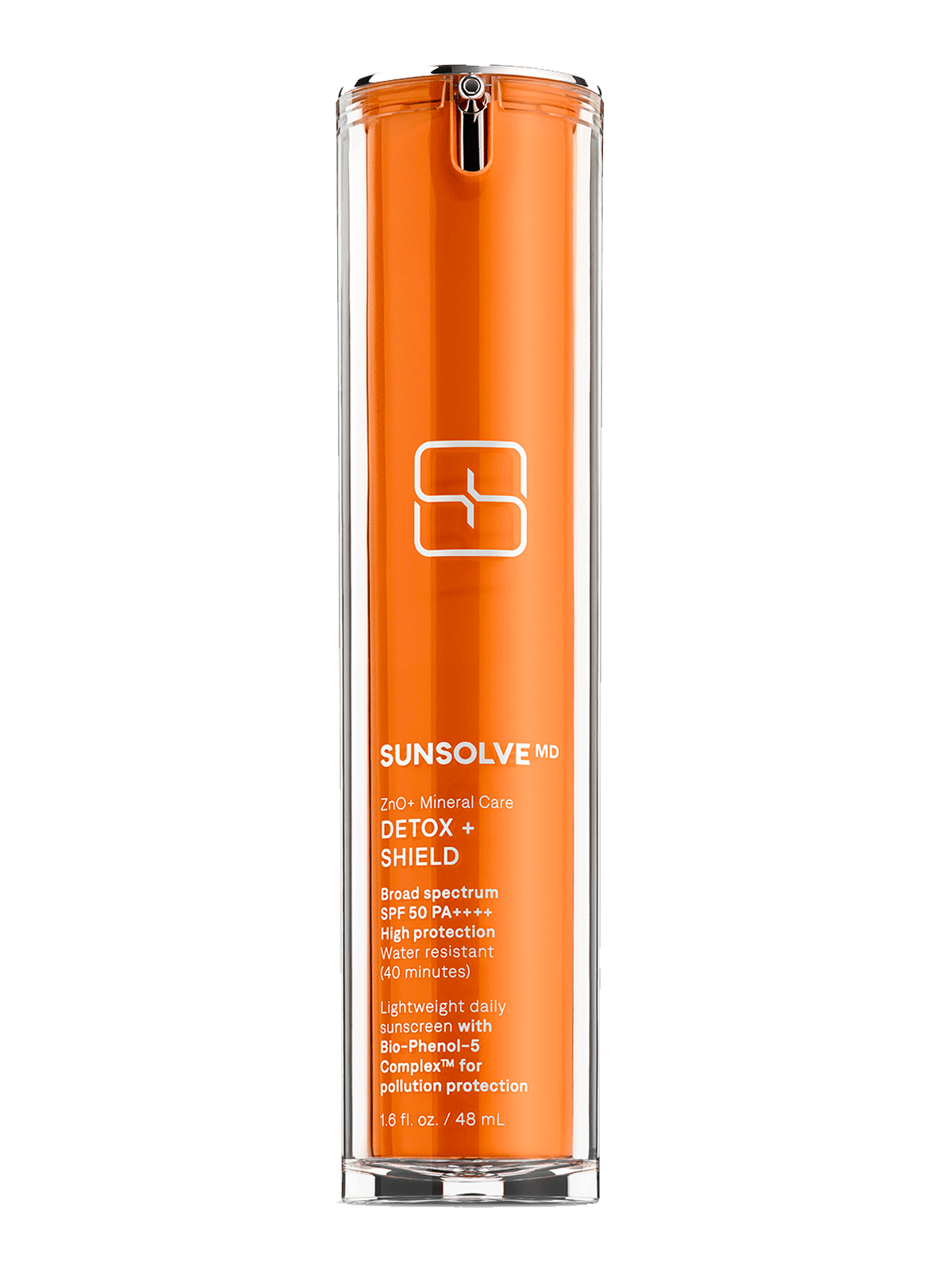
At SunsolveMD, every formula is built on 12% non-nano zinc oxide - a photostable mineral that delivers comprehensive UVA and UVB defense without degrading in sunlight or relying on synthetic absorbers. Our ZnO+™ system takes it further by suspending zinc in a matrix of marine enzymes and antioxidant buffers, transforming passive UV filtration into active skin support.
Why Broad-Spectrum Alone Isn't Enough

Protection is essential, but it's reactive. This means that while it can stop damage from happening, it doesn't address the photodamage that's already accumulated or the cellular dysfunction triggered by years of UV exposure.
That's where our approach diverges from traditional SPF. We don't just block UV - we reverse it. Our proprietary SolveDNAReverse™ technology is a patent-protected complex that supports your skin's natural DNA repair enzymes, helping undo the oxidative stress, telomere instability, and MMP expression caused by sun exposure. It's engineered to intercept the biological cascades behind aging, pigmentation, and barrier breakdown at a molecular level.
Think of it as SPF with a repair function built in. You're protected in real time, and your skin is actively working to reverse past damage while you wear it.
The SunsolveMD Difference
We develop our formulas in-house at our Los Angeles biotech lab and engineer them at our clinical innovation hub in Denmark. Every product is built on SolveTech™ - a closed, patent-protected platform that treats sun protection as the entry point to cellular skin health, not the finish line.
Our broad-spectrum mineral SPF doesn't just meet FDA standards. It exceeds them by pairing photostable zinc oxide with DNA repair technology, anti-inflammatory actives, and targeted treatment complexes. You get comprehensive UV defense that's also calming reactivity, supporting hydration, and addressing concerns like pigmentation, aging, and blemishes.
Sun Protection Meets Skincare
Each formula in our range is designed to protect and treat simultaneously, so your SPF does more than prevent - it improves.
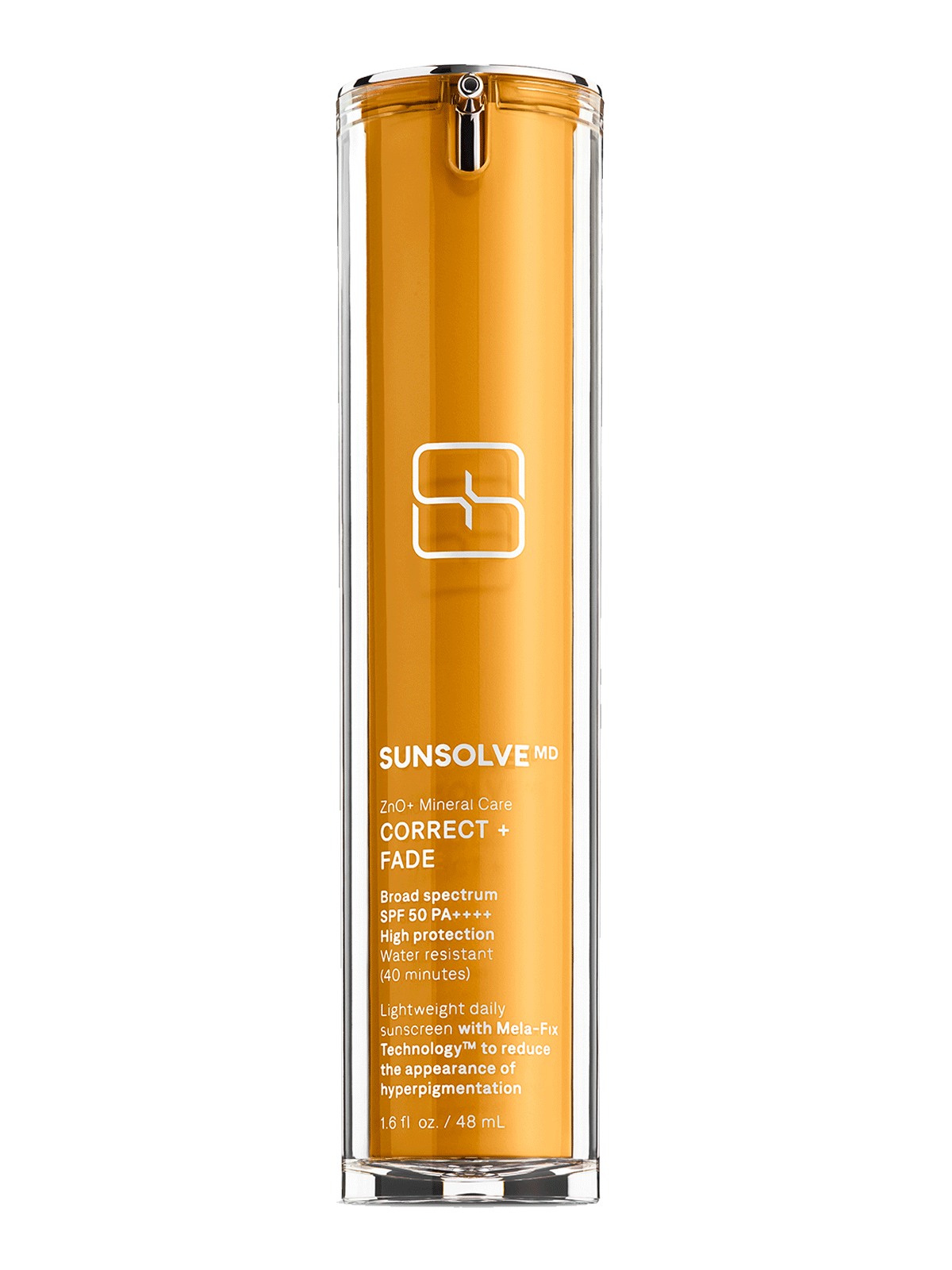
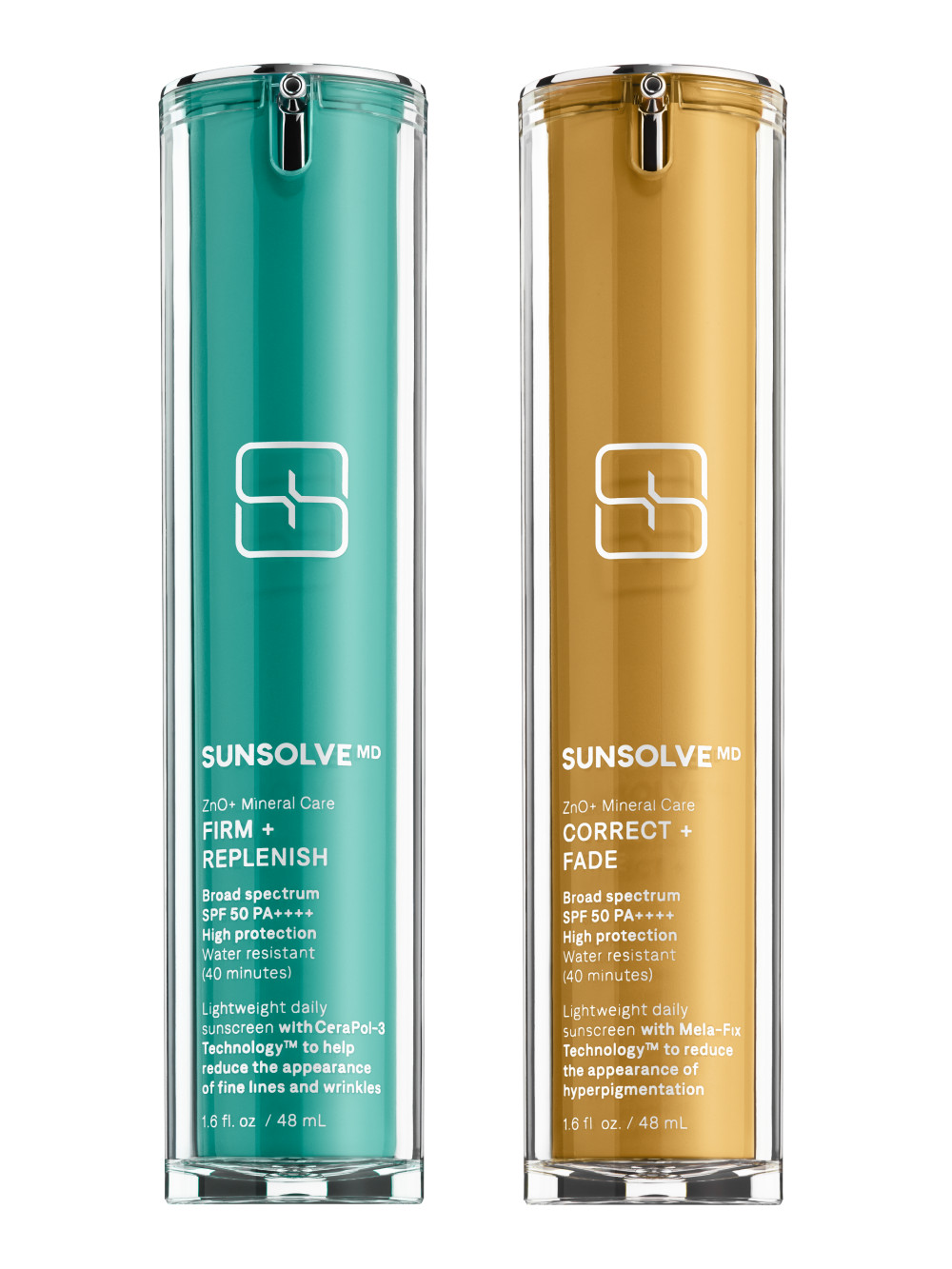
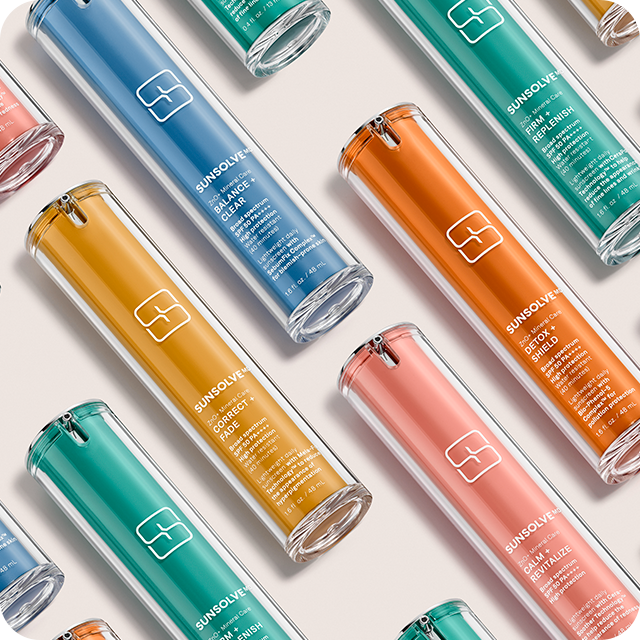
Correct + Fade pairs broad-spectrum defense with Mela-Fix technology to visibly reduce hyperpigmentation and even skin tone. Clinical testing showed 94% of participants saw brighter, more uniform skin after 28 days of use.
Firm + Replenish combines UV protection with peptides and barrier-restoring lipids to address fine lines, firmness, and dermal depletion. It's formulated for skin that's aging under environmental stress or recovering from in-office treatments.
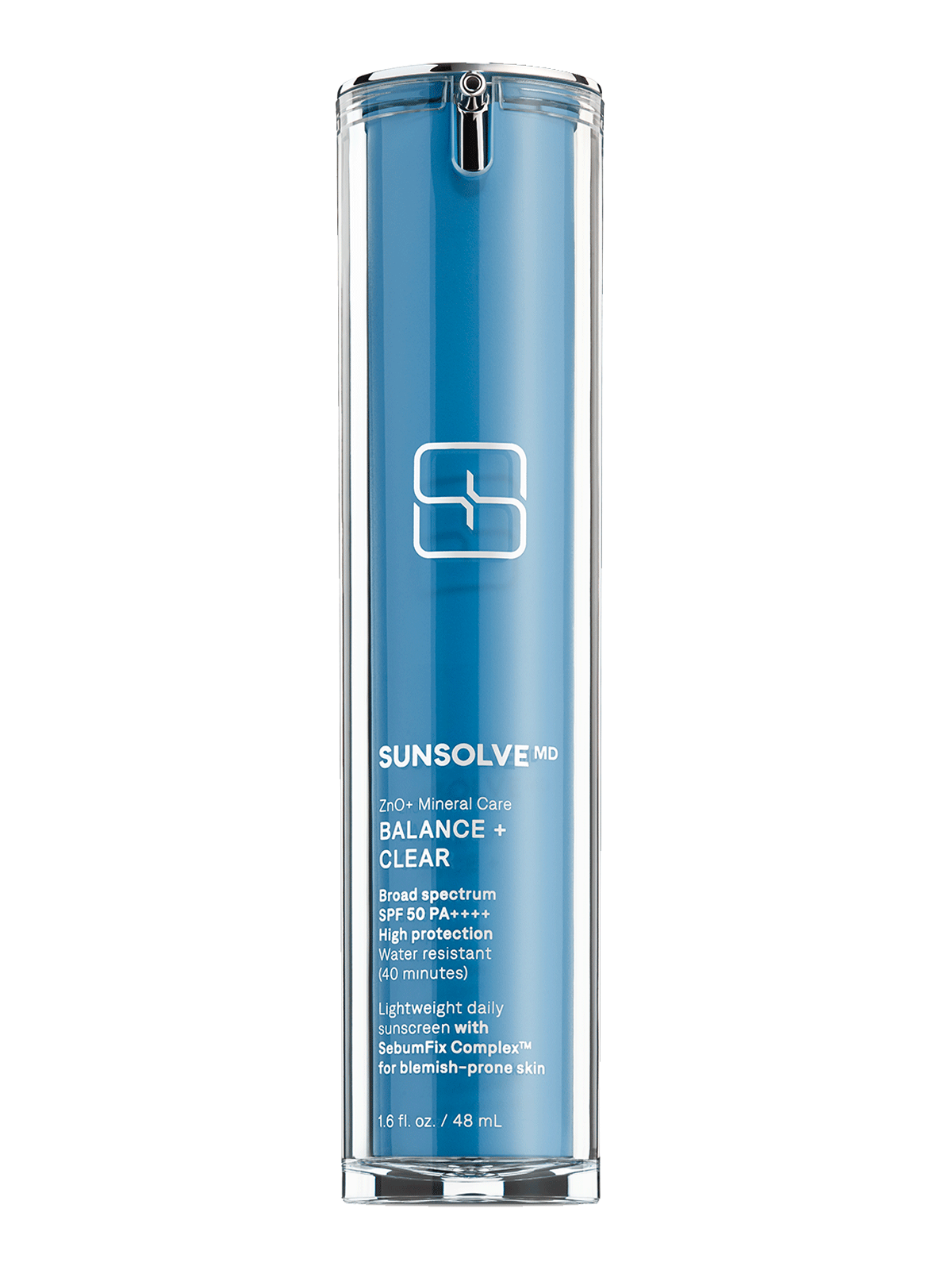
Balance + Clear delivers mineral SPF alongside SebumFix complex, a triple-targeting system designed for acne-prone and reactive skin. 90% of clinical participants reported fewer breakouts and visibly calmer skin within four weeks.
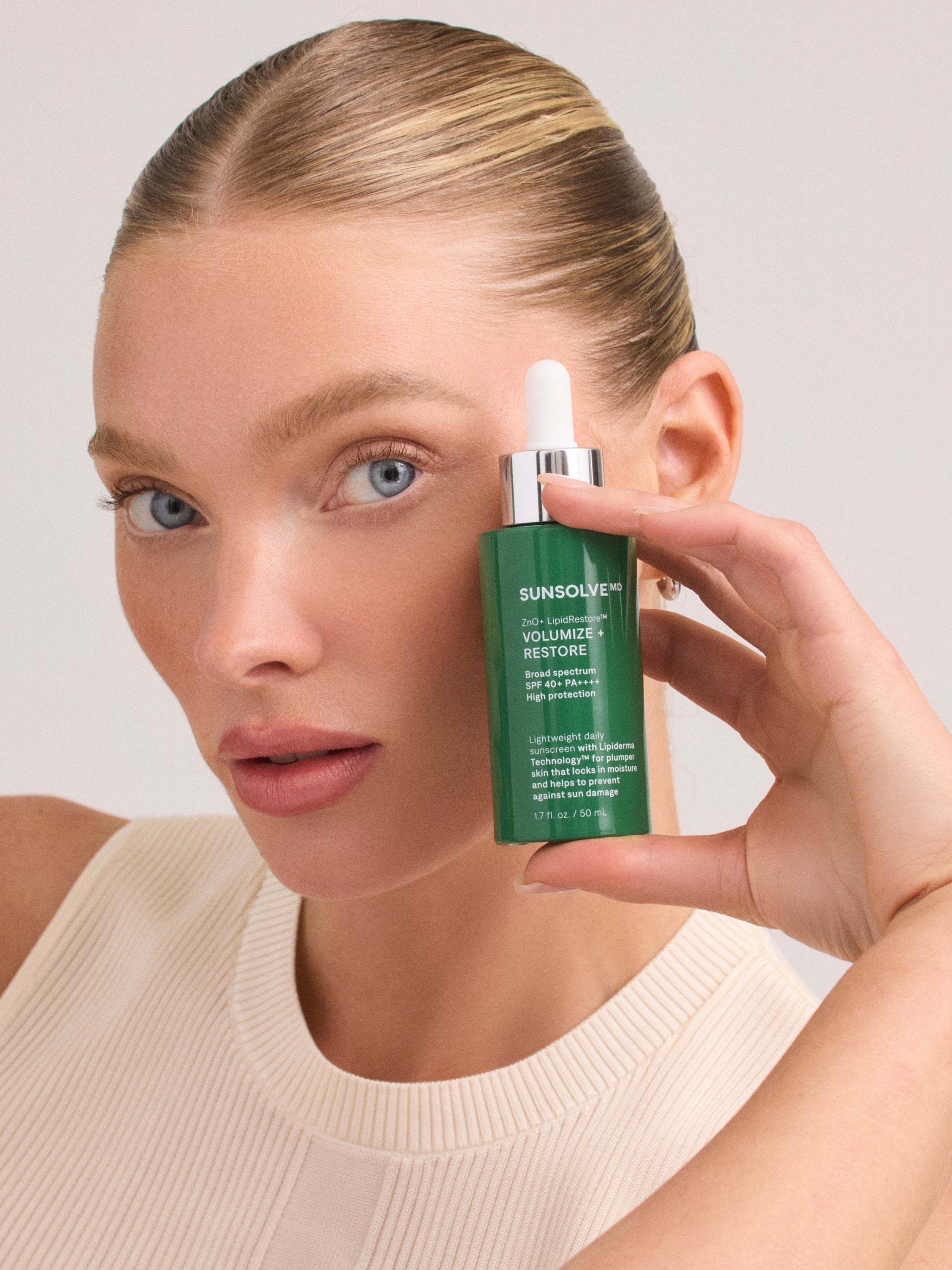
Volumize + Restore floods barrier-compromised skin with hydration while maintaining full broad-spectrum protection, making it ideal for dry or sensitized complexions.
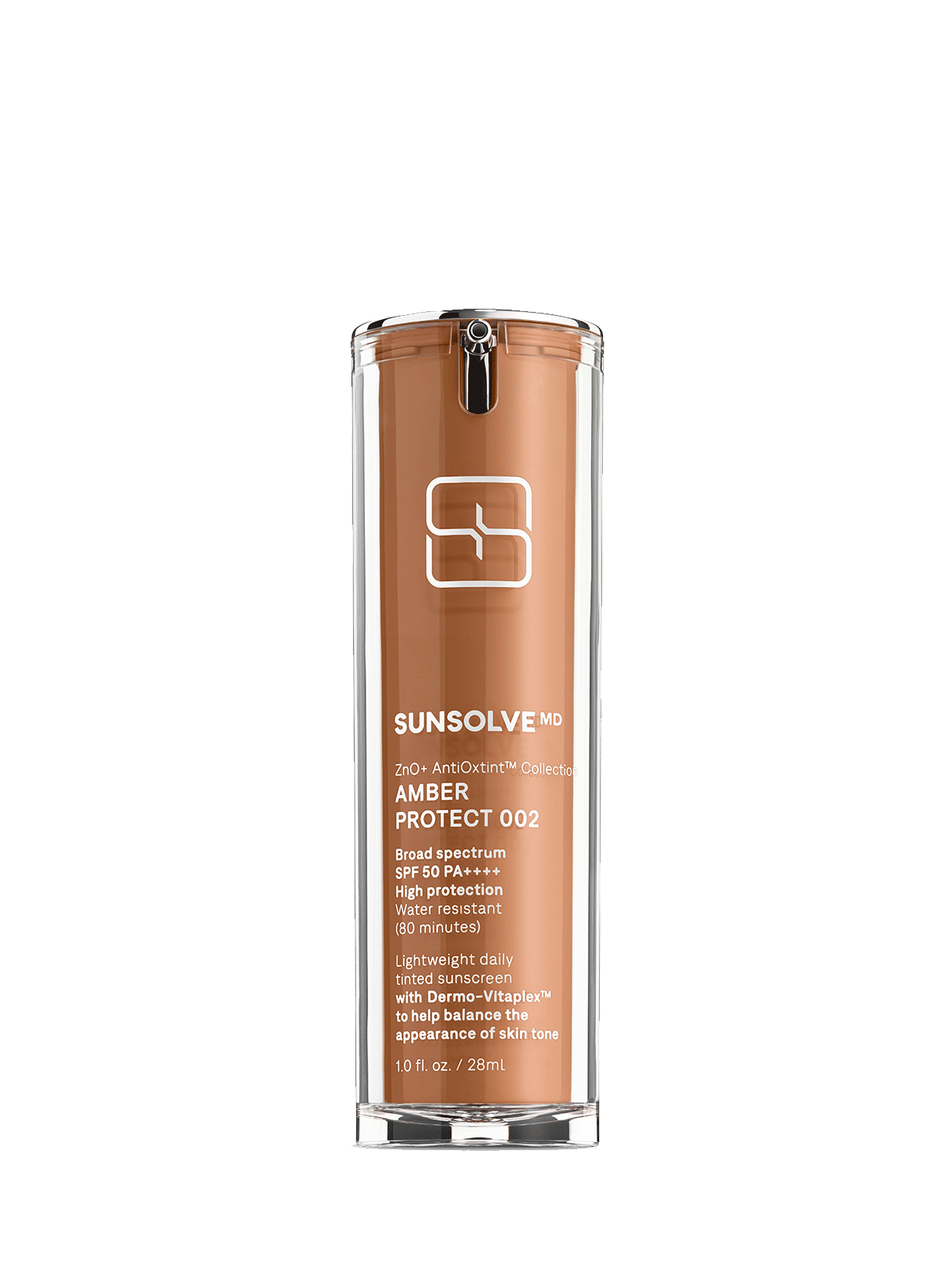
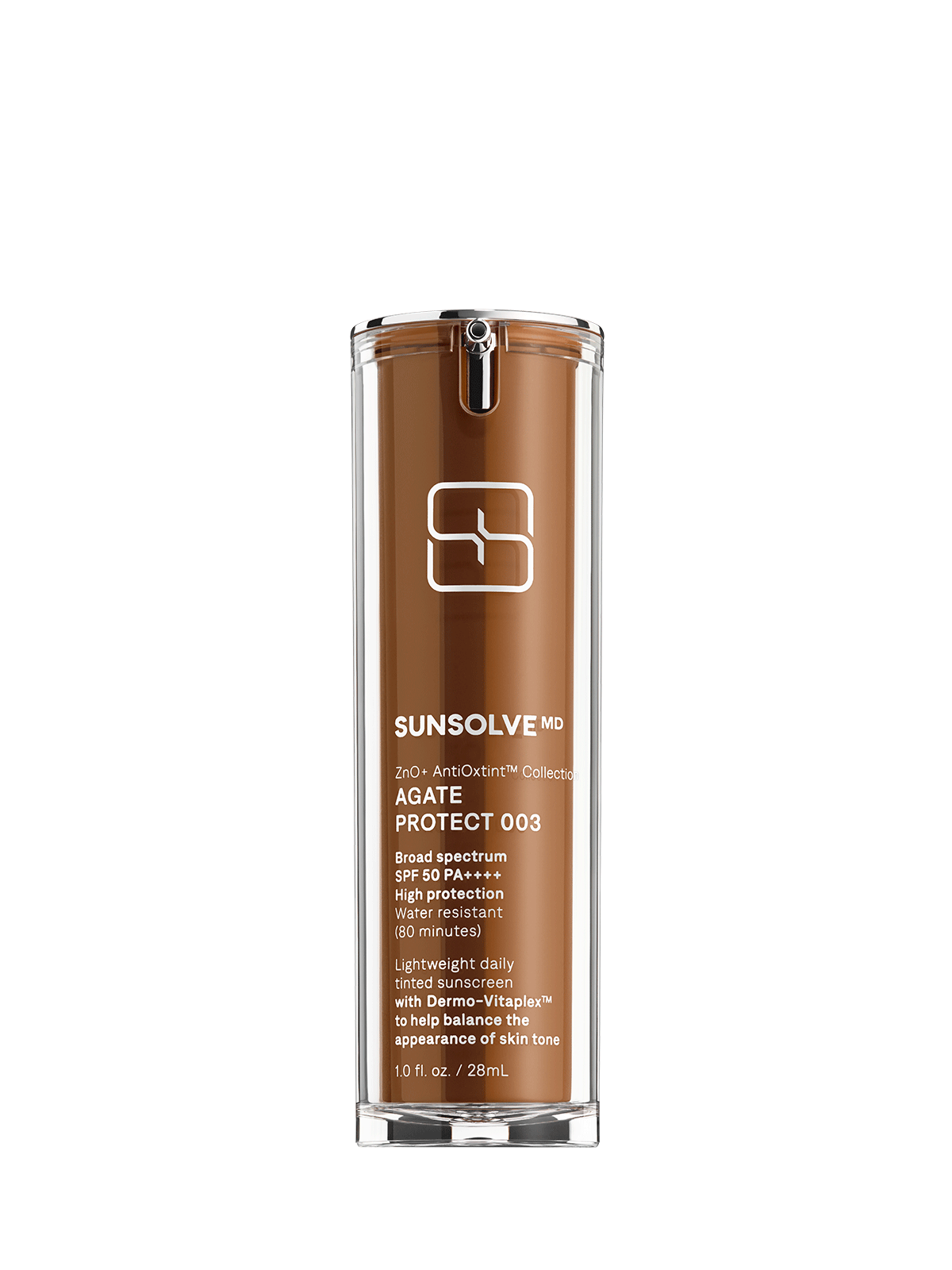
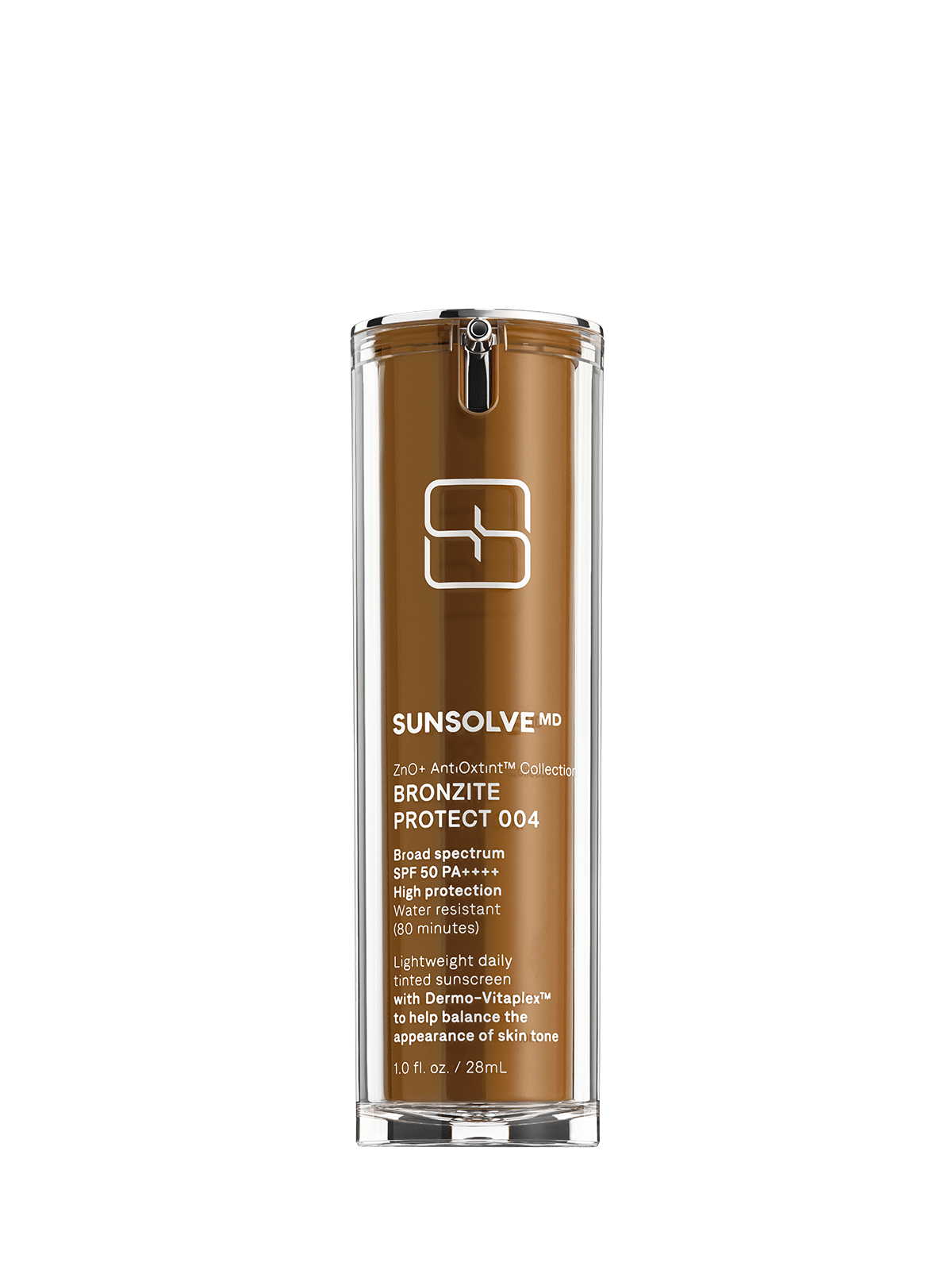
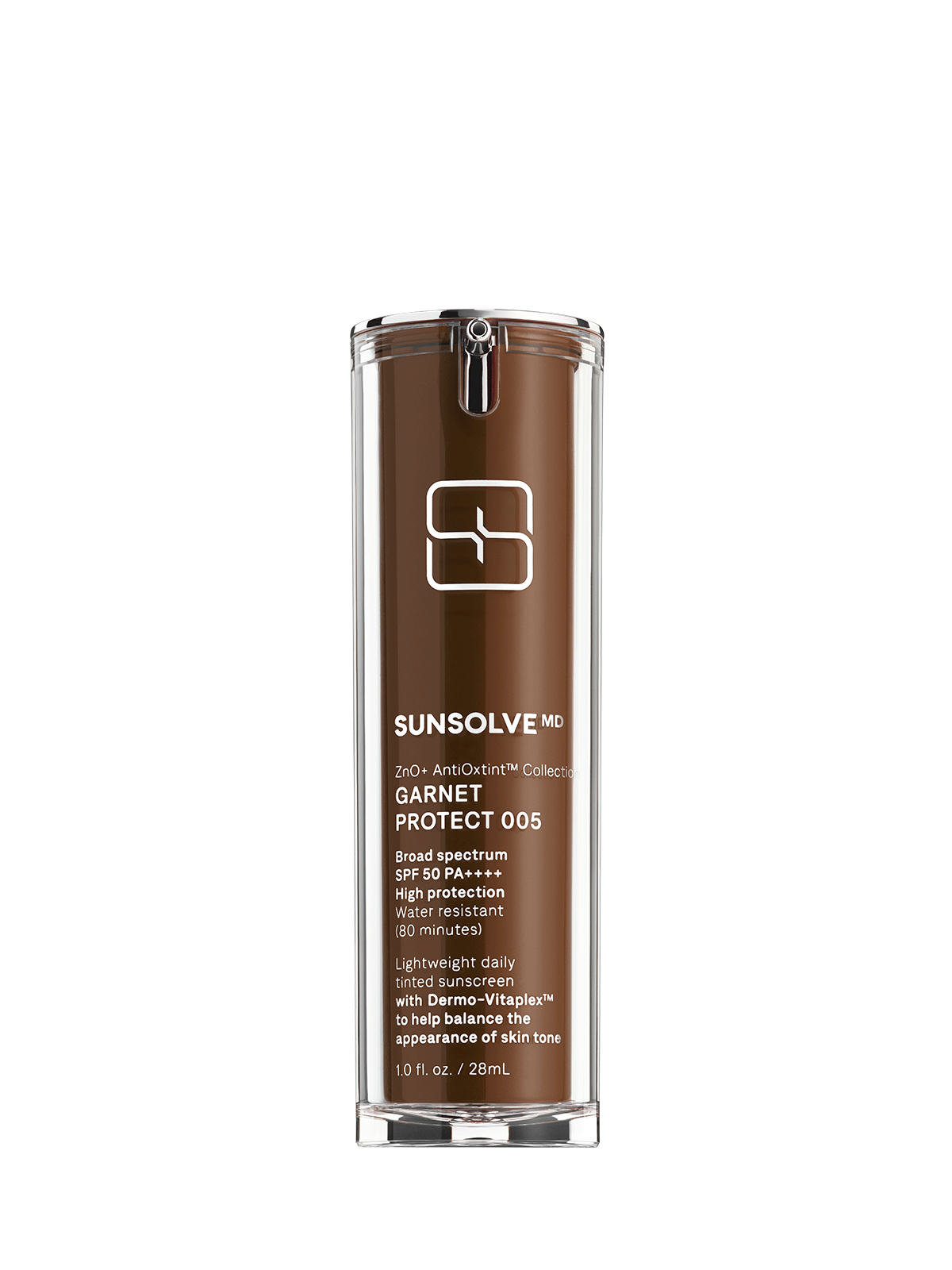
We also offer a tinted mineral SPF range, delivering natural skin tone enhancement with zero white cast - tested across all Fitzpatrick types to ensure true inclusivity.
The Takeaway
Broad-spectrum protection is non-negotiable, but it's also just the baseline. The question isn't whether your sunscreen blocks UVA and UVB - it's whether it's doing anything beyond that. Because if you're going to apply SPF correctly daily, it should work as hard as the rest of your routine.
That's why we built gentle zinc-based sun protection that doesn't just defend your skin - it actively repairs it.