




Tinted Sunscreen vs Skin Tint: What's The Difference?
Both products come in a small tube, both promise a light, breathable finish that looks like skin rather than makeup, and both have colonised the same shelf in the same bathroom cabinets. And the language around them has become so interchangeable that a reasonable person could be forgiven for assuming that a skin tint and a tinted sunscreen are the same product with different marketing.
They are not, and the distinction is actually regulatory rather than cosmetic. One is a drug in most jurisdictions, while the other is a makeup product. That difference determines what each product is legally required to do, what it has been tested for, and whether you can rely on it as your sun protection.
The Regulatory Line
A tinted sunscreen is a sunscreen. It contains UV filters at tested concentrations, it carries an SPF rating and broad-spectrum designation, and it has been through standardised efficacy testing to substantiate those claims. The tint is an addition to a product whose primary function is photoprotection.
A skin tint is a cosmetic base. Its primary function is to even out the appearance of the complexion. It may contain SPF, and many do, but the sun protection is a secondary feature added to a product designed around coverage and finish.
This sounds like a technicality until you consider what it means in practice. A tinted sunscreen is formulated so that the tint does not compromise the filter system. A skin tint with SPF is formulated so the filter system does not compromise the finish. When those two priorities conflict, and they frequently do, each product resolves the conflict in a different direction.
The Application Density Problem
Here is where the practical difference becomes significant, and it is the single most important thing to understand about this comparison.
SPF ratings are established at an application density of 2mg per square centimetre of skin. That is a substantial amount of product, roughly a third of a teaspoon for the face alone. It is the standard on which every SPF number on every label is based.
Almost nobody applies a complexion product at that density. A skin tint is designed to be sheer and to be applied sparingly, because that is what makes it look like skin. Applied at the amount that produces the desired finish, a skin tint labelled SPF 30 is typically delivering a fraction of that protection. Not because the product is dishonest, but because the way you use it bears no relation to the way it was tested.
A tinted sunscreen is formulated to be applied at sunscreen density and still look acceptable. That is a genuinely difficult formulation challenge, and it is the reason a well-made tinted SPF is a more complex product than it appears.
What Iron Oxides Add
The pigments used to create tint in both categories are iron oxides, and they are doing something more useful than colour.
Iron oxides add meaningful protection across the visible light spectrum, a range that UV filters were not designed to address. Visible light is now well recognised as a contributor to pigmentation, particularly in deeper skin tones and in melasma, and a pigmented formula intercepts a portion of it that a clear formula handles through its antioxidant content instead.
This is a real advantage, and it applies to any product containing iron oxides at sufficient concentration. It is also the reason dermatologists frequently recommend tinted formulas specifically for pigmentation-prone patients rather than treating tint as an optional cosmetic extra. If you are choosing between a clear and a tinted mineral SPF for hyperpigmentation, the tinted option is the more protective one.
Coverage, Finish And Where The Line Is Blurring

The old assumption was that you traded finish for protection. A skin tint looked better, a tinted sunscreen protected better, and you picked your priority.
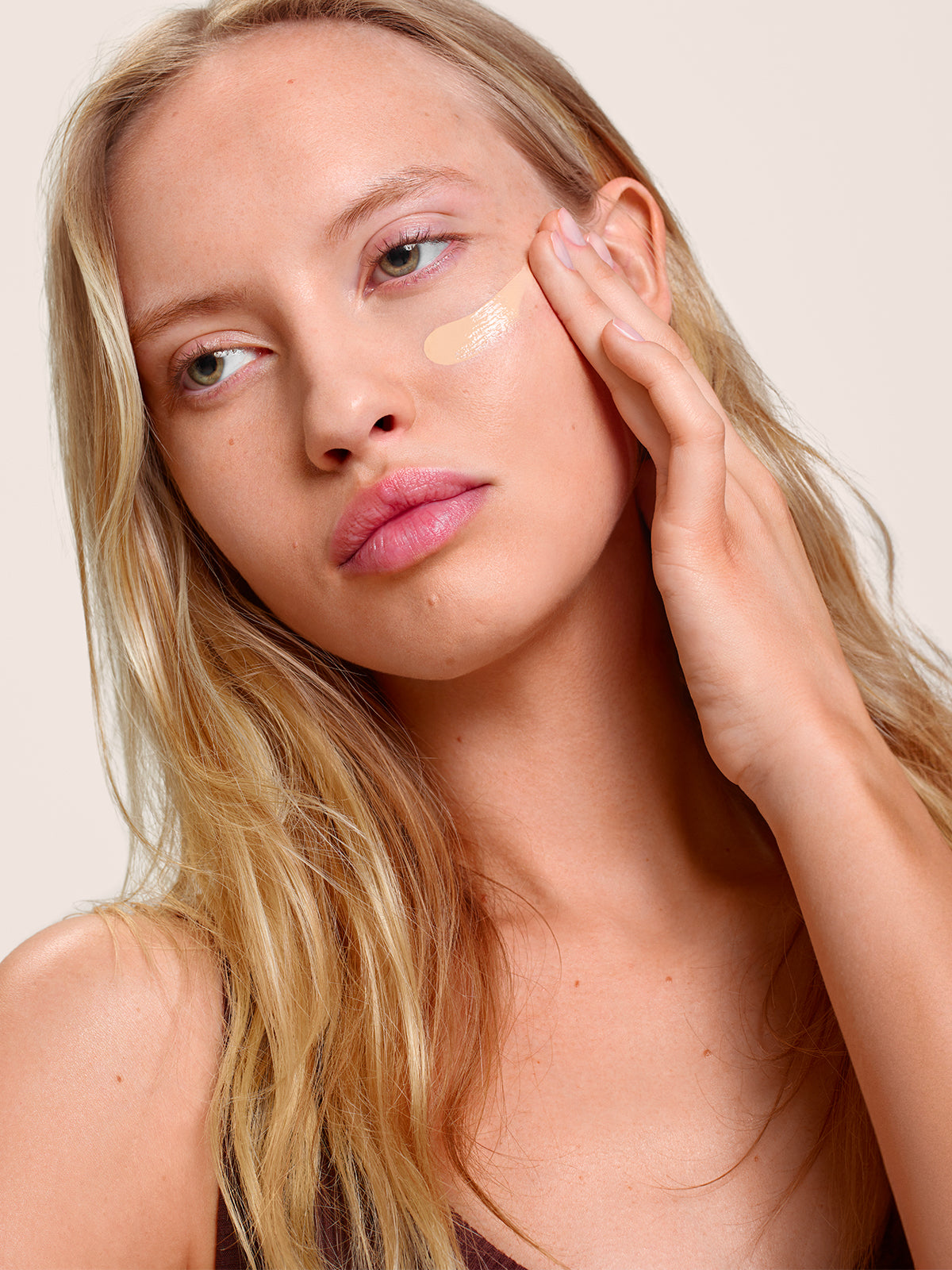
That trade-off was real for a long time and it is now largely obsolete. The formulation challenge in a tinted sunscreen is making a product that still looks like skin at full sunscreen density, and the brands that have solved it have produced something that genuinely functions as both: blurring, tone-evening, comfortable to wear all day, and delivering broad-spectrum SPF at the strength printed on the tube. Sheer buildable coverage, accurate undertones and a proper shade range are no longer the exclusive territory of makeup.
Which is why the more useful question is not which category to buy from, but whether the specific product in your hand has been tested and labelled as a sunscreen. A tinted SPF that looks like a skin tint gives you everything. A skin tint that is not a sunscreen gives you the finish and leaves the protection to something else.
The practical answer for most people is a tinted mineral SPF as both the protective layer and the base, with concealer added where you want more coverage. What does not work is running a cosmetic base alone and treating its SPF number as your sun protection.
If the pigment side of this is what interests you most, our blog on how iron oxides contribute to sun protection goes further into the visible light mechanism.
How To Tell Which One You Own
Check the front of the pack for a stated SPF number and a broad-spectrum claim, then check where the product sits in the brand's own range. Products marketed within a suncare line and carrying full SPF labelling are sunscreens. Products marketed within a complexion or base range with SPF mentioned as a benefit are cosmetics.
The ingredient list confirms it. A tinted sunscreen will list its UV filters as active ingredients, usually at the top of the label in a separate actives panel. A skin tint with incidental SPF will often list filters within the general ingredient list at lower concentrations.
The SunsolveMD Difference
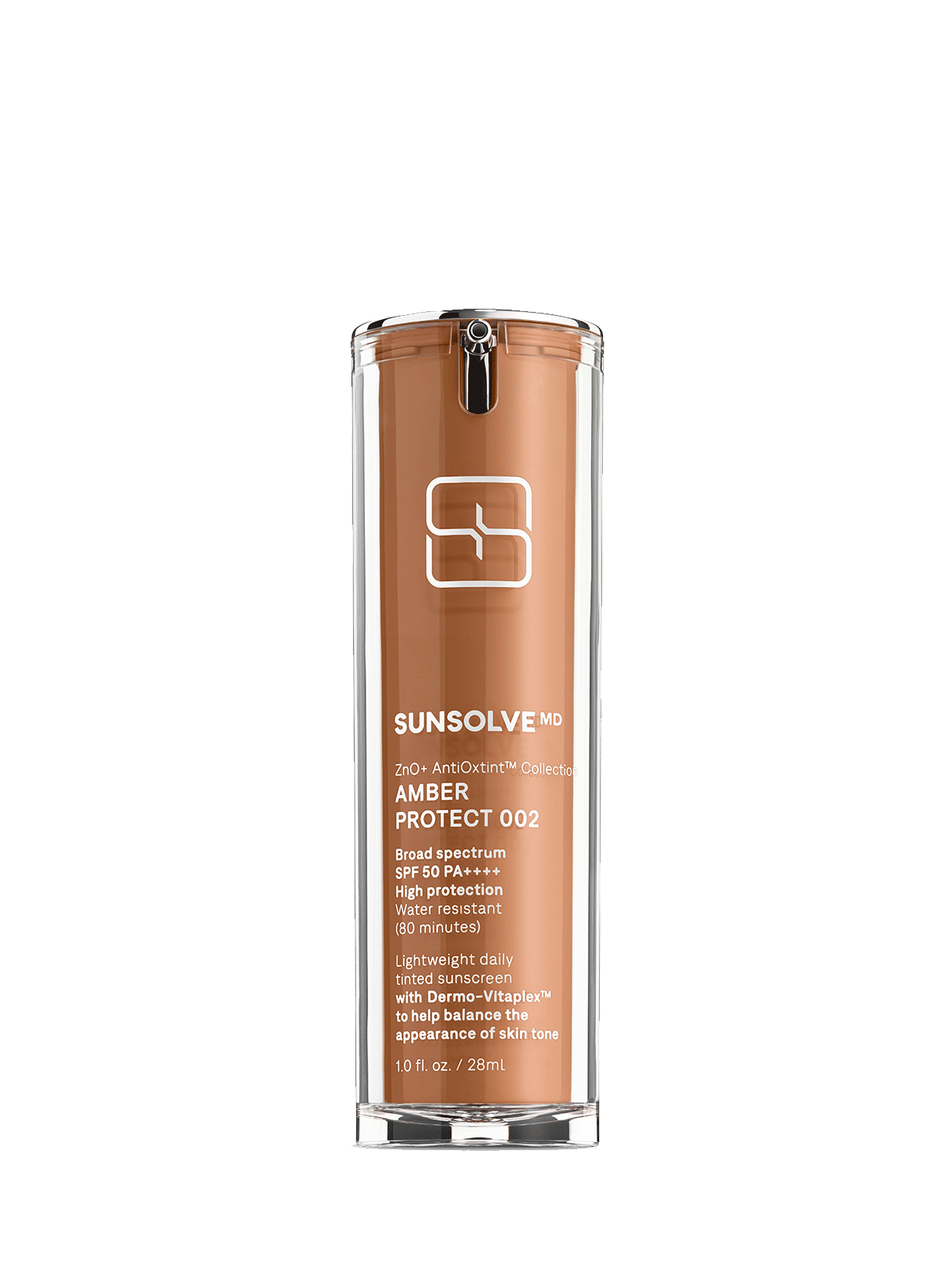
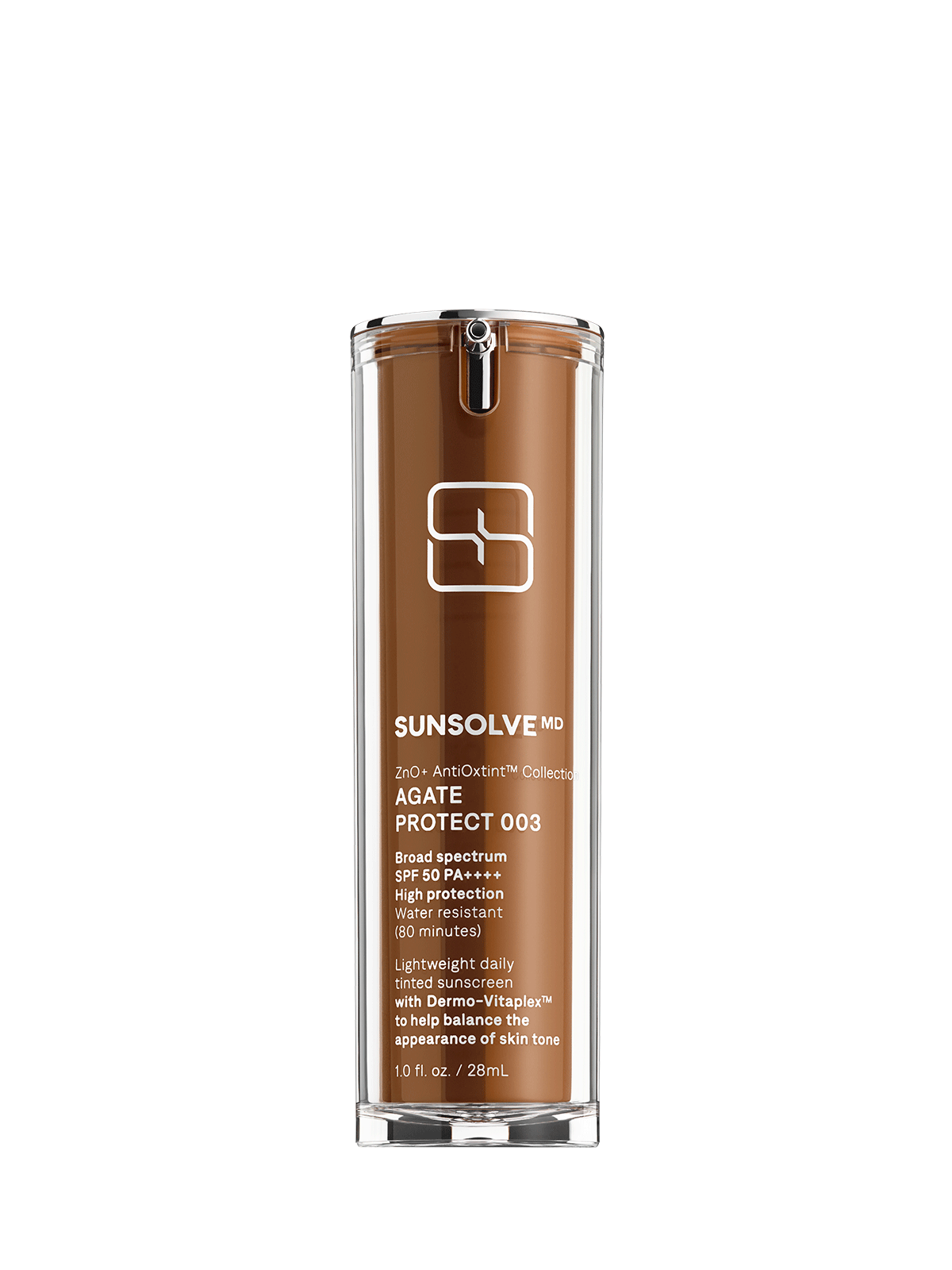
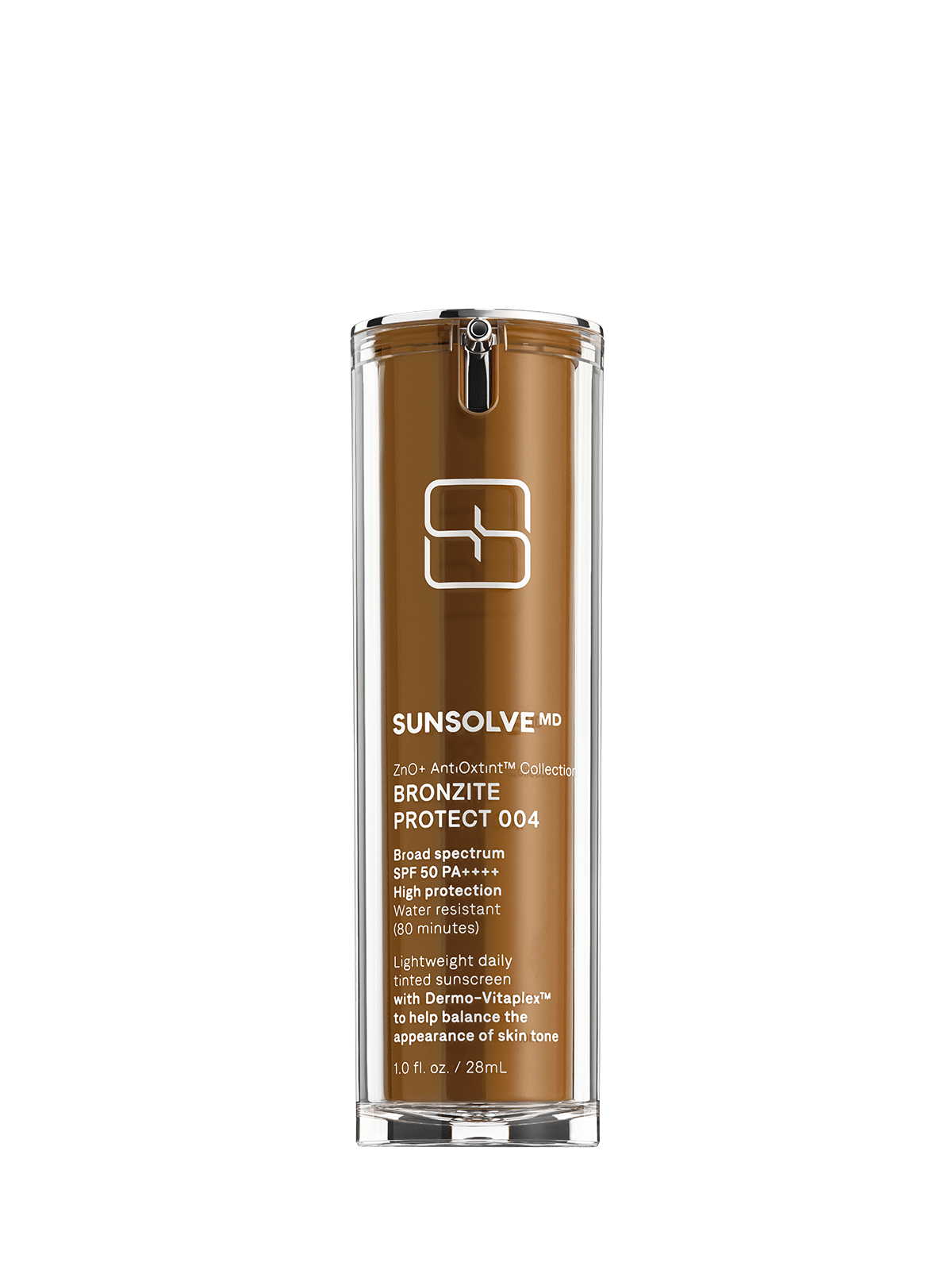
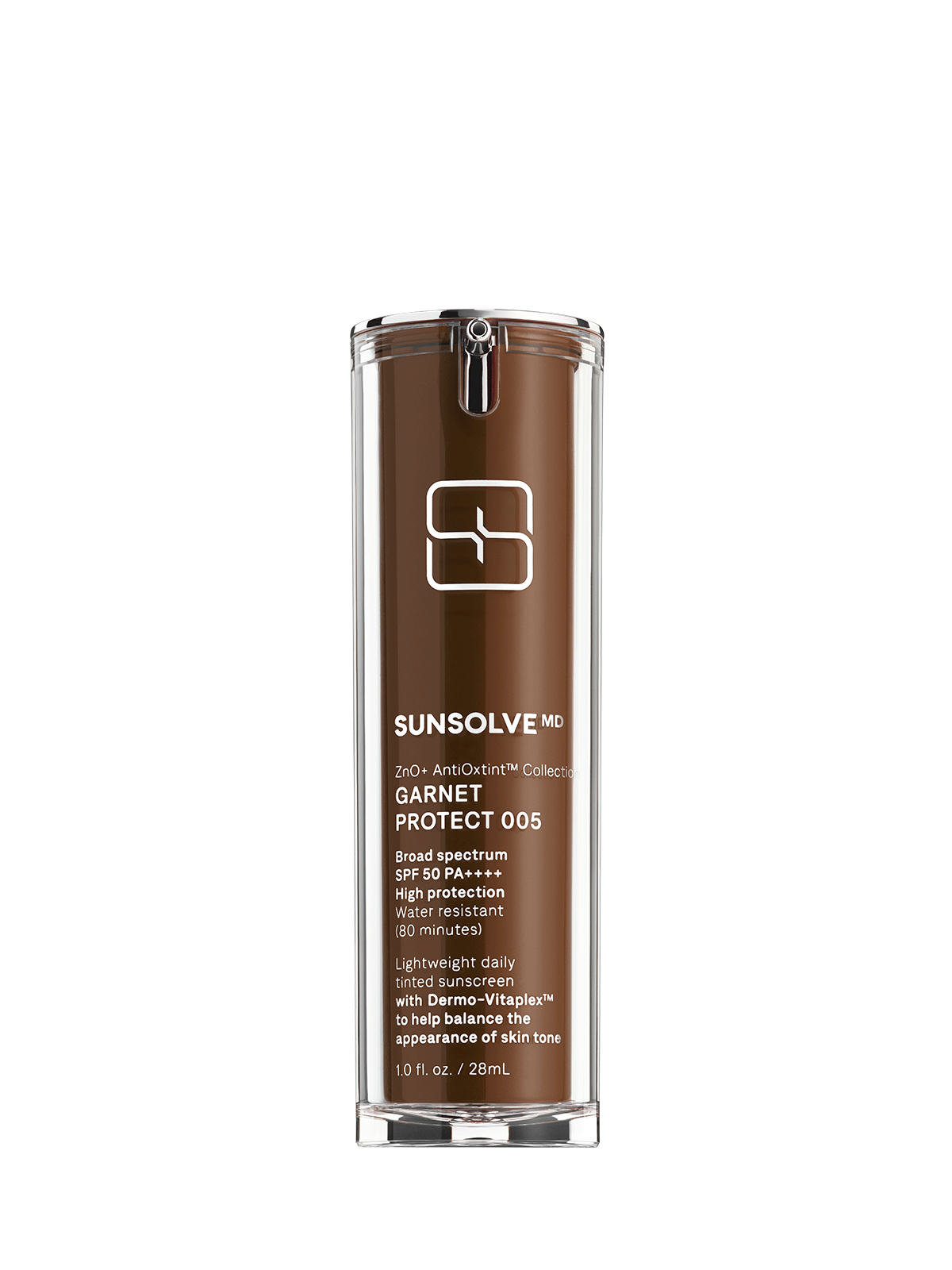
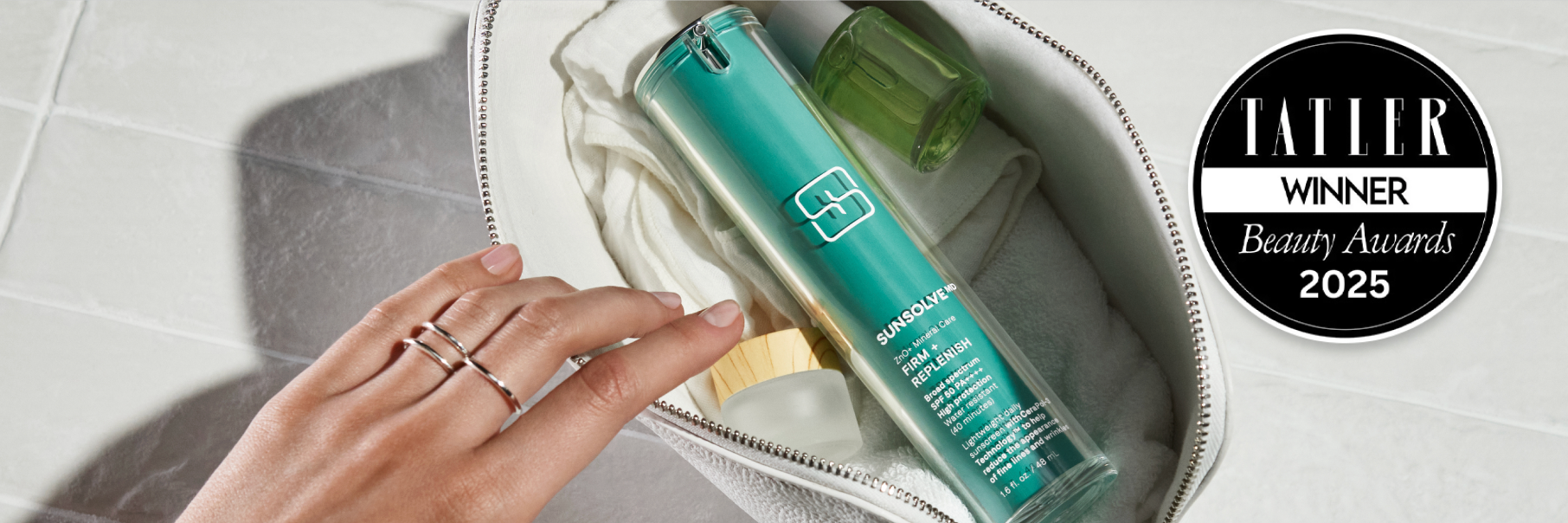
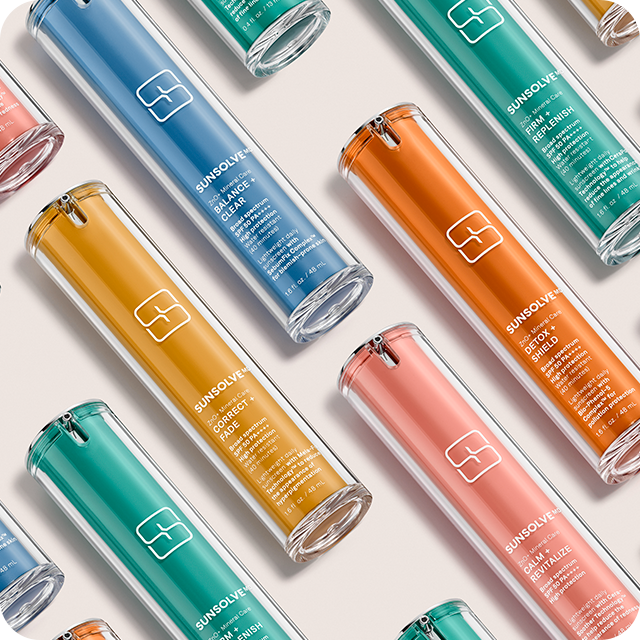
We built our tinted mineral sunscreen range to refuse the trade-off entirely. The ZnO+ AntiOxtint formulas deliver broad-spectrum SPF 50 protection from micronized zinc oxide at full sunscreen strength, with iron oxides extending defence into the visible light range, and our Dermo-Vitaplex™ Complex of zinc oxide, niacinamide and vitamin E working underneath to calm, correct and visibly even tone over time. Available in six flexible shades with a silky, blurring finish that behaves like a skin tint and protects like a sunscreen, because we never accepted that you should have to pick one. Apply it generously. That is the whole point.
FAQs
Can a skin tint with SPF 30 be my only sun protection?
Not reliably. Skin tints are applied at a fraction of the density used in SPF testing, so the real-world protection is considerably lower than the label suggests. Use a dedicated sunscreen underneath or choose a tinted SPF as your base.
Is tinted sunscreen better than clear sunscreen?
For pigmentation concerns, yes, because the iron oxides add visible light protection that clear mineral formulas lack. For UV protection specifically, a well-formulated clear and tinted product at the same SPF perform comparably.
Do I need foundation over a tinted sunscreen?
Usually not for everyday wear. A well-made tinted SPF evens tone and blurs texture enough to work as a base on its own, which is the whole appeal. Add concealer where you want more coverage.
How do I find the right shade in a tinted sunscreen?
Tinted SPFs are formulated to be more forgiving than foundation because the pigment load is lower and sheerer. Choose based on undertone rather than exact depth, and warm the product between fingers before applying to help it adapt.
Can I use a tinted sunscreen on its own after a treatment?
Mineral tinted formulas are frequently recommended post-procedure, partly for the protection and partly because the tint helps camouflage residual redness. Check with your practitioner on timing for your specific treatment.